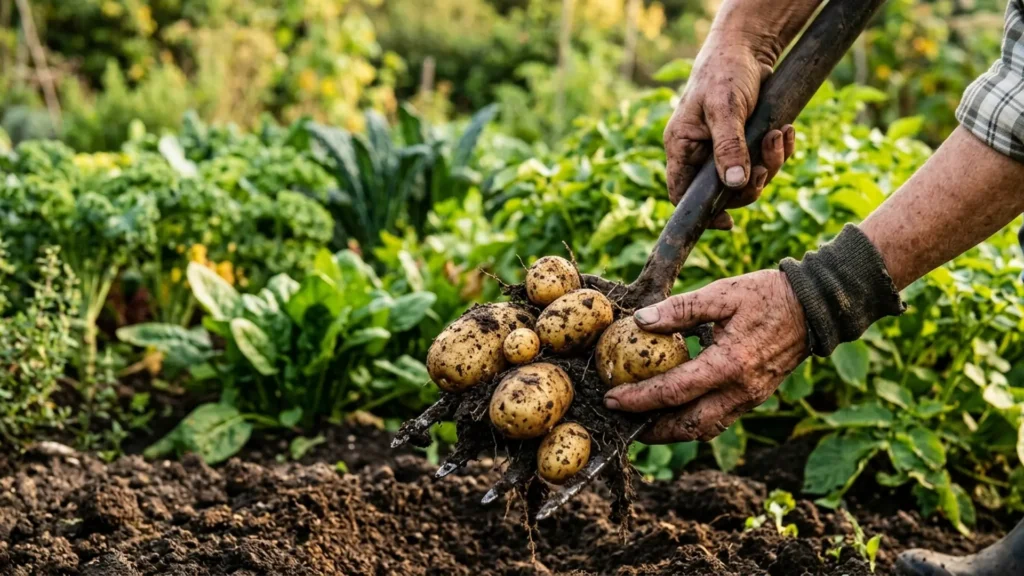
When to harvest potatoes comes down to one question: do you want tender new potatoes or full-size storage potatoes? New potatoes are ready about 6 to 8 weeks after planting, right around the time the plants flower, while storage potatoes need the foliage to die back first, usually 90 to 120 days from planting. That is the short answer, and it covers most people. The longer answer, the one that decides whether your crop stores until spring or rots by Thanksgiving, depends on your variety, your USDA zone, your first frost date, and what you do in the two weeks after you dig. I have grown potatoes long enough to ruin a crop by digging too early and to lose another by leaving it in ground that froze. Both mistakes are avoidable.
This guide walks through the timing for new versus storage potatoes, the signs that actually mean ready, a zone-by-zone harvest window, the doneness test you can do with your thumb, and the curing and storage steps most articles skip. Get the timing right and you dig clean, thick-skinned potatoes that keep for months.
New Potatoes Versus Storage Potatoes
This is the fork in the road, and everything else follows from it. New potatoes are immature tubers dug while the plant is still green and growing, prized for thin skins and sweet, waxy flesh. Storage potatoes are mature tubers dug after the plant has finished its life, with thick skins that let them keep for months. They are the same plant at different stages, not different crops.
For new potatoes, watch for flowering. When the plant pushes its white, pink, or lavender blooms, the tubers underground are roughly egg-sized and ready to steal. Reach into the soil at the edge of the hill and feel for them, or lift one plant entirely. The Old Farmer’s Almanac notes that earlies are usually lifted while the plants are still in flower, with tubers about the size of a hen’s egg. Eat new potatoes within a week or so; their thin skins will not store.
For storage potatoes, ignore the flowers and wait for the whole plant to die. When the foliage yellows, browns, and flops over on its own, the tubers have stopped growing and started setting skin. That is your signal to stop watering and start counting down to harvest.
The Signs Potatoes Are Ready
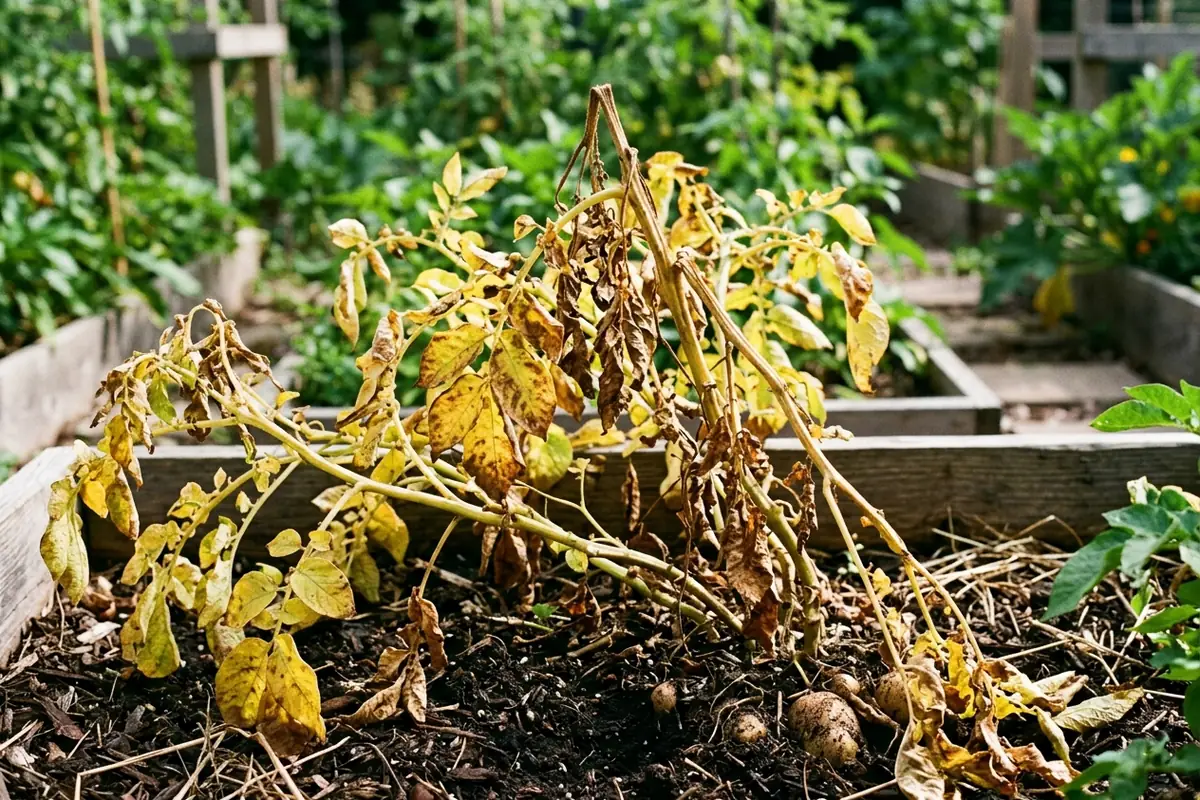
People want a calendar date, but potatoes go by the plant, not the page. Here are the signals that matter, in order of reliability.
Foliage die-back. The most trustworthy sign for storage potatoes. When the tops yellow and collapse without disease or drought forcing it, the plant has finished. This is senescence, the natural end of the season, and it means the tubers are at full size.
Flowering. The signal for new potatoes, not mature ones. Flowers say the plant has set tubers underground and you can start stealing small ones. Some varieties barely flower, so do not panic if yours skips the show; go by days instead.
Days to maturity. Your seed potato or variety description gives a days-to-maturity number. Count from planting. Early varieties run 70 to 90 days, mid-season 90 to 110, and late or russet types 110 days and up. This is your backstop when the plant gives mixed signals.
The skin test. Dig one potato and rub your thumb across it. If the skin rubs off easily, the potatoes are still immature and need more time in the ground to set skin for storage. If the skin holds firm and does not scuff, they are cured enough underground to dig and store. This single test has saved more of my crops than any calendar.
When to Harvest by USDA Zone
Your zone and first frost date set the outer limit, and matching variety to season is how northern gardeners get a crop at all. Here is the framework I use.
| USDA Zone | Typical harvest window | Strategy |
|---|---|---|
| 3-5 (cold, short season) | Aug to mid-Sept | Choose a variety maturing in 75 days or fewer to beat fall frost. |
| 6-7 (temperate) | Sept to Oct | Plant early spring; full range of varieties works. |
| 8-9 (warm) | Late spring crop, plus fall crop | Spring planting harvested early summer; a second crop planted late summer. |
| 10-11 (hot) | Winter into spring | Grow in the cool season; summer heat is too much for tubers. |
To plan a fall crop in warm zones, find your first frost date and count back 15 to 20 weeks; that is your planting window. In cold zones, the math runs the other way: pick a fast variety so its days-to-maturity finishes before frost arrives. The University of Maryland Extension puts the general window at 90 to 120 days from planting, which is the number to layer your zone and frost date on top of.
The Frost Rule That Saves Your Crop
Here is the rule that most guides bury and that ruined a crop of mine years ago. Potato tops can take a light frost, but the tubers must never freeze in the ground. Frozen flesh turns mushy and sweet and rots in storage, and no amount of curing fixes it. So if a hard frost is coming before the plants have died back on their own, do not wait. Cut the tops off at the soil line, leave the tubers underground for up to two more weeks to firm their skins, then dig before the ground freezes. Cutting the tops mimics natural die-back and tells the tubers to set skin without exposing them to the killing cold.
If die-back has already happened naturally, you have more flexibility. In mild zones you can leave mature potatoes in the ground a couple of weeks as a kind of root-cellar storage, as long as the soil stays dry and unfrozen and rodents are not a problem. But the moment a hard freeze threatens, get them out.
Days to Maturity by Variety Type
Variety is the lever that decides your harvest date more than anything except frost. Seed catalogs sort potatoes into three rough groups, and knowing which you planted tells you when to start watching the plants. First earlies and second earlies mature in roughly 70 to 90 days and give you new potatoes fastest, which makes them the smart pick for short-season northern gardens. Mid-season or maincrop types take 90 to 110 days and yield the bulk of a storage crop. Late varieties, including most russets, need 110 days and often more, which is why a russet planted in spring in a cold zone may not finish before frost.
If you do not know what you planted, the plant will still tell you through die-back and the skin test, but the days-to-maturity number is the cleanest way to plan backward from your frost date. I keep the tag from every seed potato bag, because the difference between a 75-day and a 120-day variety is the difference between a reliable harvest and a gamble in zones 3 through 5. When in doubt for a cold garden, plant the faster variety. You can always grow a slower one in a year you start earlier under cover.
Timing in Containers and Raised Beds
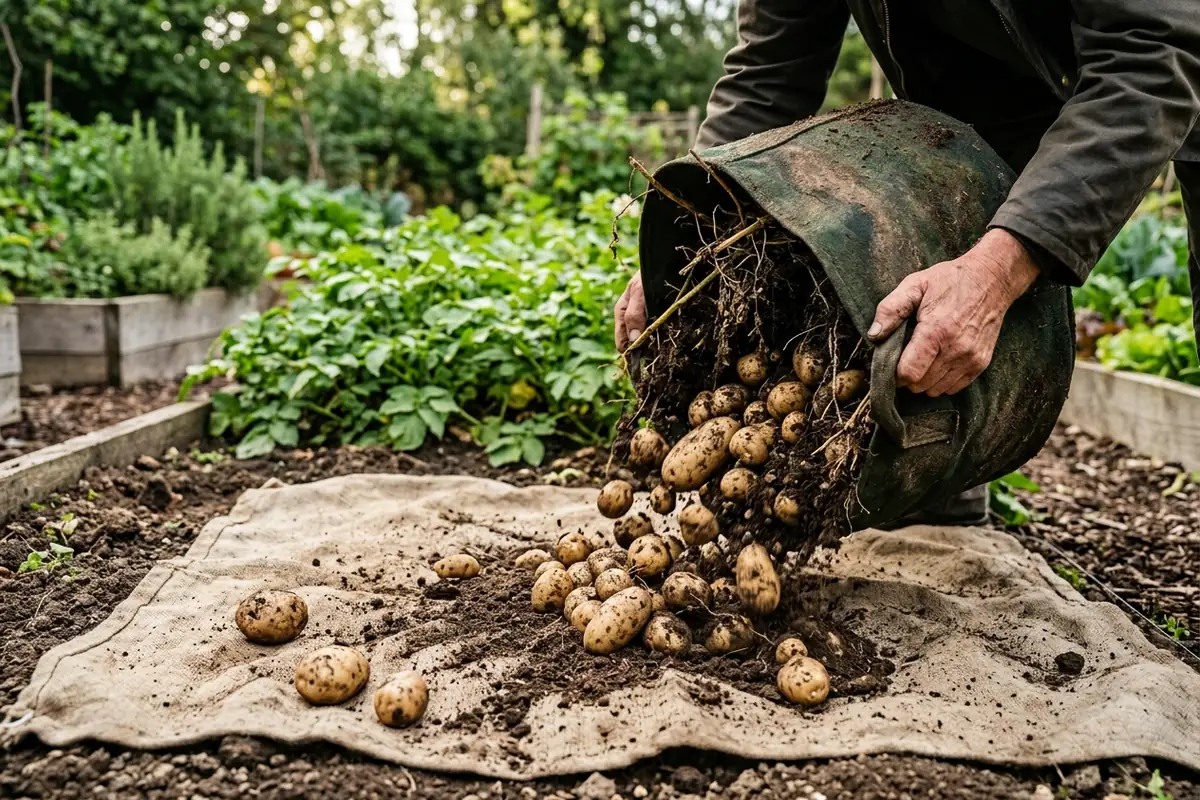
Container and raised-bed potatoes follow the same signals as in-ground plants, with two practical twists. First, you can check progress without a fork. In a fabric grow bag or a deep pot, reach down through the loose mix at the edge and feel for tubers, or simply tip the whole container onto a tarp when the tops die back and sort the harvest by hand. That makes the new-potato versus storage-potato choice easier to manage, because you can sneak a few earlies and leave the rest to mature.
Second, containers heat and dry faster than open ground, so the plants can finish their cycle a touch sooner in warm weather, and they are more exposed to an early cold snap. Watch a potted crop more closely as fall approaches, and bring containers into a garage or shed if a hard frost is forecast before the plants have died back. The skin test still rules: rub a tuber, and if the skin holds, the crop is ready to cure whether it grew in a bed or a bucket.
How to Dig Without Wrecking the Crop
Timing is half the job; the dig is the other half, because a punctured potato will not store. Wait for the foliage to die back, then leave the tubers in the ground about two weeks to set skin before you dig. Choose a dry day with dry soil. Wet digging means muddy, bruise-prone potatoes and a higher chance of rot.
Work a garden fork into the soil well outside the plant’s center, then lift from underneath rather than stabbing down through the hill. Start wide and ease inward; you will still spear a few, and those go straight to the kitchen because they will not keep. Keep the dug potatoes out of direct sun. Light turns potato skins green, and green means solanine, a bitter compound you do not want to eat. Move them to shade or a basket as you go.
Curing and Storing for the Long Haul
This is where storage potatoes are made or lost, and it is the step the quick listicles skip. Curing is a short rest that lets the skins thicken and small wounds heal over, a process called suberization. Without it, even cold-stored potatoes rot within weeks. With it, they keep for months.
Cure dug potatoes for 10 to 14 days at 50 to 60 degrees Fahrenheit with high humidity, around 85 to 95 percent, in the dark. A basement, garage, or shed often hits this naturally in fall. Do not wash them first; brush off loose dirt and leave the skins intact. After curing, move them to long-term storage at 40 to 50 degrees, dark, and well ventilated, where good potatoes keep four to eight months.
A few storage rules: never refrigerate raw potatoes below about 40 degrees, which converts their starch to sugar and makes them oddly sweet and dark when cooked. Keep them away from onions and apples, which speed sprouting. And check the bin every few weeks, pulling any that go soft before one bad potato spoils the lot.
Potatoes also reward planning ahead in the rest of the garden. If you want to start your seed potatoes earlier or push a fall crop later, a protected space helps, and our beginner’s guide to greenhouse gardening covers how to extend both ends of the season. And because potatoes do best in open, sunny ground rather than crowded against turf, the edging and bed-prep habits in our piece on small garden lawn care help you carve out a clean potato patch without the grass creeping back in.
Common Harvest Mistakes
After years of digging potatoes and helping other gardeners with theirs, the same handful of errors come up again and again. Knowing them in advance is easier than fixing them after.
Digging too early for storage. Impatience is the big one. Potatoes pulled before the tops die and the skins set bruise easily and rot in weeks. If you want a storage crop, let the plant finish and pass the skin test first. The reward for waiting is months of good eating.
Watering right up to harvest. Soaking the bed in the final stretch keeps the skins thin and invites rot in storage. Ease off water once die-back starts and let the soil dry. Dry ground at digging time is one of the simplest things you control, and it pays off all winter.
Skipping the cure. Plenty of gardeners dig potatoes and dump them straight into a bin, then wonder why they soften by November. The 10-to-14-day cure is not optional for storage; it is the step that heals the skins. Build it into your plan.
Storing in the light or the cold. A sunny kitchen counter greens potatoes, and a standard refrigerator is too cold and sweetens them. Dark, cool, and ventilated is the target. A cardboard box in a cool basement beats a clear bin on a windowsill every time.
Frequently Asked Questions
How do I know when potatoes are ready to harvest?
For new potatoes, harvest about 6 to 8 weeks after planting, once the plants flower. For storage potatoes, wait until the foliage yellows and dies back on its own, usually 90 to 120 days from planting, then leave the tubers in the ground two more weeks to set skin before digging.
Can I harvest potatoes after the plant dies?
Yes, and you should for storage potatoes. Die-back means the tubers are mature. Leave them in the ground about two weeks after the tops die to thicken their skins, then dig on a dry day, as long as the soil has not frozen.
What happens if I harvest potatoes too early?
You get new potatoes, which are tender and tasty but have thin, fragile skins that will not store. They are fine to eat within a week. If your goal is potatoes that keep for months, wait for full die-back and the skin test before digging.
Should I water potatoes before harvest?
No. Stop watering once the foliage begins to die back. Letting the soil dry out helps the skins set and reduces the chance of rot. Harvest in dry soil on a dry day for the cleanest, longest-keeping potatoes.
Can potatoes stay in the ground after the first frost?
The tops tolerate light frost, but the tubers must not freeze. If a hard frost is coming before die-back, cut the tops, wait up to two weeks, then dig before the ground freezes. Frozen tubers turn mushy and rot in storage, and curing cannot fix them.
Why did my harvested potatoes turn green?
Light exposure. Potatoes left in the sun, or stored in light, produce chlorophyll and the bitter toxin solanine, which shows as green skin. Keep harvested potatoes shaded during digging and store them in the dark. Cut away small green areas, or discard heavily greened potatoes.
Bottom Line
When to harvest potatoes depends on what you want: dig new potatoes about 6 to 8 weeks in, at flowering, and dig storage potatoes after the foliage dies back, around 90 to 120 days, leaving them two more weeks to set skin. Match your variety to your zone and first frost, never let tubers freeze in the ground, and cure the storage crop for 10 to 14 days before stashing it cool and dark. Do that and you will pull thick-skinned, clean potatoes from your own garden that last well into winter. The harvest is the easy part once you let the plant tell you it is time. Match the variety to your season, watch the foliage rather than the calendar, keep the tubers out of the freeze and the light, and the rest is just digging on a dry afternoon and stacking the cured bins away for the cold months ahead.