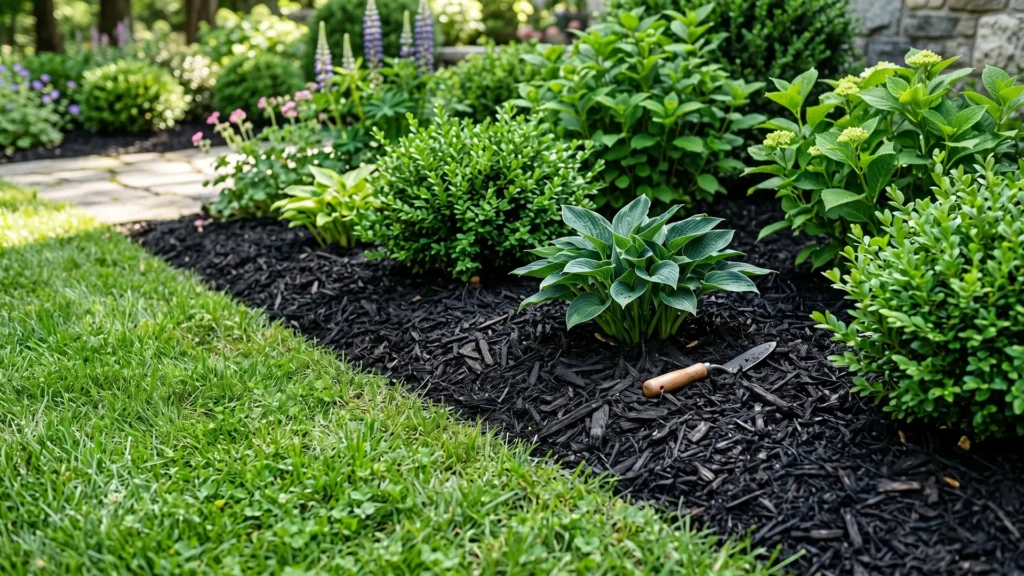
Black mulch is dyed wood mulch that gives beds a clean, dark backdrop, and whether it helps or hurts your plants depends almost entirely on your climate and how you apply it. I have spread a lot of it over the years, and I have also pulled it back out of beds where it cooked tender roots in July. The color is the easy part. The decisions that actually matter are which zone you garden in, what the bag is really made of, and how deep you lay it. Get those three right and black mulch is a fine, affordable choice. Get them wrong and you are paying for a problem.
This guide walks through all of it in plain terms: what black mulch is made from, where it genuinely helps, the zones where it works against you, how to read a bag so you do not bring home contaminated wood, exact application depth, and how to bring back that flat, gray look once the color fades. I will also tell you, honestly, where I would skip it.
What Black Mulch Actually Is
Most bagged black mulch is shredded or chipped wood that has been colored with a dark dye. The wood base is usually one of three things: clean bark or wood chips from sawmills, recycled pallet and construction wood, or, in the cheapest products, reclaimed wood of unknown origin. The dye sits on the surface. It does not soak all the way through, which is why a fresh black chip is dark on the outside and pale wood on the inside when you snap it.
There is also rubber “mulch” sold in black, made from ground tires. I do not consider that mulch in any useful sense. It does not break down into soil, it can leach zinc and other compounds, and it gets brutally hot. If you want a permanent black surface under a swing set, fine. For a planting bed, skip it.
The two colorants you will see on labels are carbon black and iron oxide. Carbon black is the same family of pigment used in tires and ink. Iron oxide is basically a refined rust pigment, and it is the one most reputable brands now use because it is inert in soil and tends to hold up a little better. Neither pigment, on its own and properly applied, is the part you need to worry about. The wood underneath is.
Where Black Mulch Genuinely Helps
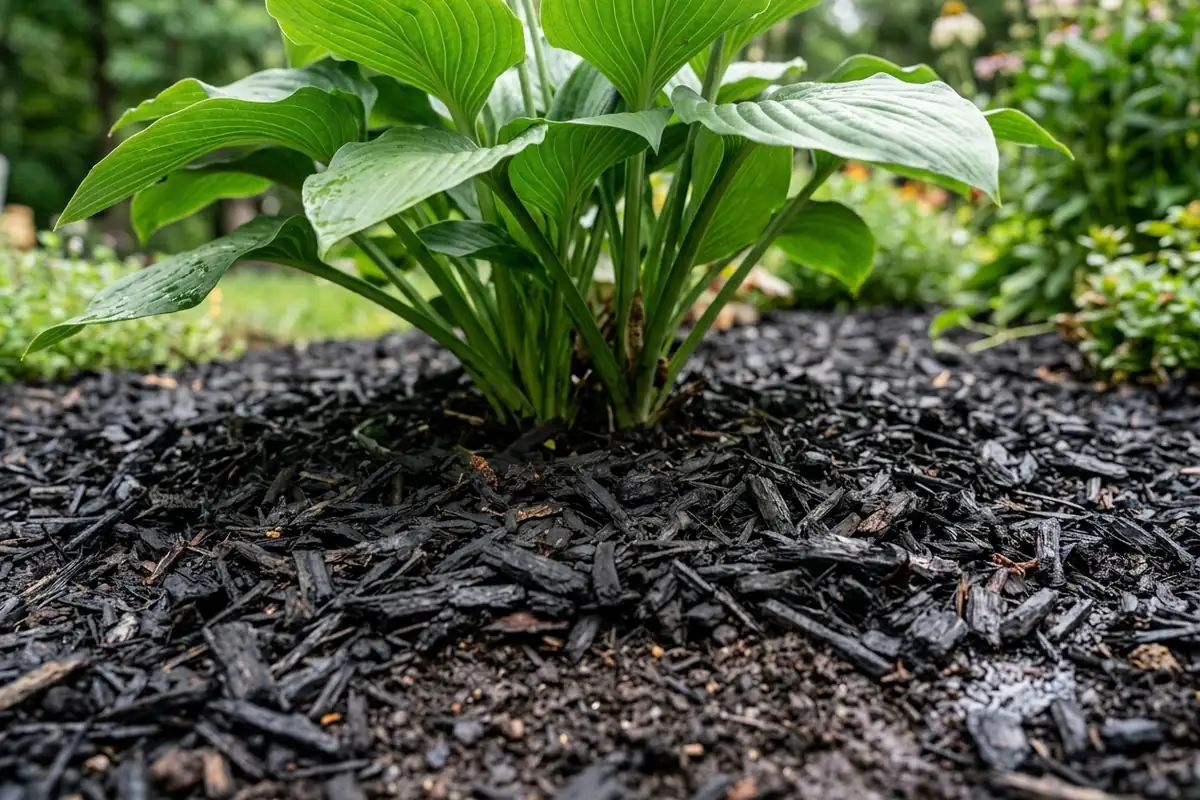
Black mulch does the same core jobs any organic mulch does, and it does them well. A 2 to 3 inch layer blocks sunlight from reaching weed seeds, so far fewer of them sprout. It slows evaporation off the soil surface, which means you water less often and the moisture you do apply lasts longer. University of Minnesota Extension notes that mulch reduces surface evaporation and helps soil hold water, cutting how often you need to irrigate. That is true of any wood mulch, black included.
The dark color adds one extra trait: it absorbs sunlight and warms the soil underneath. In spring, in a cool climate, that is a real advantage. Warmer soil wakes roots up sooner and can nudge heat-loving plants like peppers and tomatoes into growth a week or two earlier. The catch is that the same heat-absorbing behavior is exactly what turns black mulch into a liability in hot regions, which I will get to.
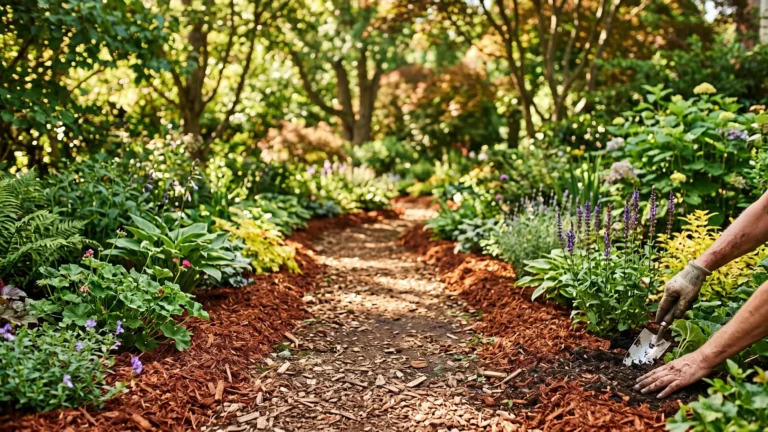
Aesthetically, there is no argument. Dark mulch makes green foliage and bright blooms pop, hides drip lines, and gives a bed that tidy, finished look that lighter natural mulch never quite matches. For front borders and anything you want to look sharp, the contrast is the whole point. It also reads as deliberate. A bed edged cleanly and topped with even black mulch tells anyone walking past that the garden is tended, even in the dead of winter when nothing is blooming. That curb-appeal value is real, and it is a big part of why landscapers reach for it on client properties.
The USDA Zone Question Nobody Else Answers
Here is the piece most articles skip entirely, and it is the single most useful thing I can tell you. Black mulch is a heat tool. Whether that heat is a gift or a hazard depends on your USDA hardiness zone and your summer reality.
| USDA Zone | Black mulch verdict | Why |
|---|---|---|
| 3-5 (cold) | Good | Short seasons benefit from earlier soil warming in spring. |
| 6-7 (temperate) | Fine, with care | Spring warming helps; pull back from stems in midsummer. |
| 8-9 (warm) | Use cautiously | Heat gain stresses shallow-rooted annuals; keep it thin. |
| 10-11 (hot) | Usually skip | Surface temps can scorch roots and seedlings; lighter mulch is safer. |
In cool zones the warming effect is the reason to choose black over natural brown. In hot zones it is the reason to avoid it around anything you care about. On a sunny July afternoon in zone 9, the surface of black mulch can run noticeably hotter than the air, and shallow feeder roots sitting just under that surface feel it. If you garden in the Deep South or the desert Southwest and you still want the look, reserve black mulch for paths and around tough, established shrubs with deep roots, never around lettuce, annual flowers, or fresh transplants.
Is Black Mulch Safe? Reading the Bag
The safety worry with dyed mulch is not really the dye. It is the wood. Cheap colored mulch is sometimes made from ground-up reclaimed lumber, and some of that lumber was pressure-treated with CCA, a preservative containing chromium, copper, and arsenic that was widely used in decks and playsets before 2004. Ground into mulch, that wood can carry those metals into your beds. That is the genuine hazard, and it has nothing to do with the color sitting on top.
So protect yourself at the store, not in the garden. Three quick checks:
- Look for a clean-wood claim. Bags that say the base is sawmill bark, forest-product wood chips, or clean recycled wood are the ones you want. Vague “recycled wood” with no source is the one to put back.
- Check for a certification mark. The Mulch and Soil Council certification logo means the product was tested and is free of CCA-treated wood. It is a small symbol and worth hunting for.
- Smell it. Fresh, decent mulch smells like wood or earth. A sour, vinegary, or ammonia-like smell means the pile fermented and went anaerobic. That “sour mulch” can burn plants on contact regardless of color. Air it out for a day or two before using it, or return it.
Penn State Extension’s survey of mulch options is a good neutral reference if you want to compare colored wood mulch against bark, leaf, and other materials before you commit. The short version: a certified, clean-wood black mulch applied correctly is safe for ornamental beds. I am still careful about using any dyed product in a vegetable garden, and I lean toward undyed bark or straw around food crops out of plain caution.
How Deep to Apply Black Mulch
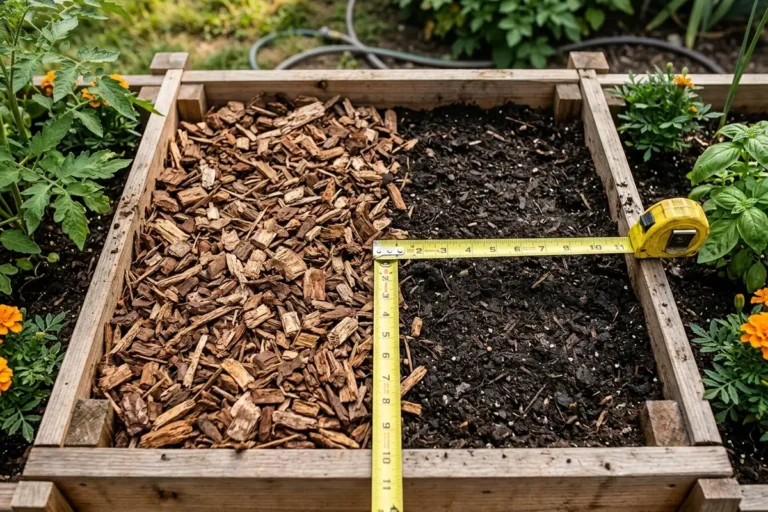
Depth is where most people go wrong, and it is simple to get right. Spread black mulch 2 to 3 inches deep. Less than 2 inches and weeds push through and the color looks thin. More than 3 inches and you start smothering roots and creating a soggy zone that invites rot. Around trees and shrubs, never pile mulch against the trunk in a cone. That “volcano” traps moisture against the bark and invites disease. Keep a few inches of bare space around every stem and trunk.
Coverage math saves you a second trip to the store. One cubic foot of mulch covers about 12 square feet at 1 inch deep, so a standard 2 cubic foot bag covers roughly 8 square feet at 3 inches, or 12 square feet at 2 inches. Use this table to estimate.
| Bed size | Bags (2 cu ft) at 2 in | Bags (2 cu ft) at 3 in |
|---|---|---|
| 50 sq ft | about 4 | about 6 |
| 100 sq ft | about 8 | about 12 |
| 200 sq ft | about 16 | about 24 |
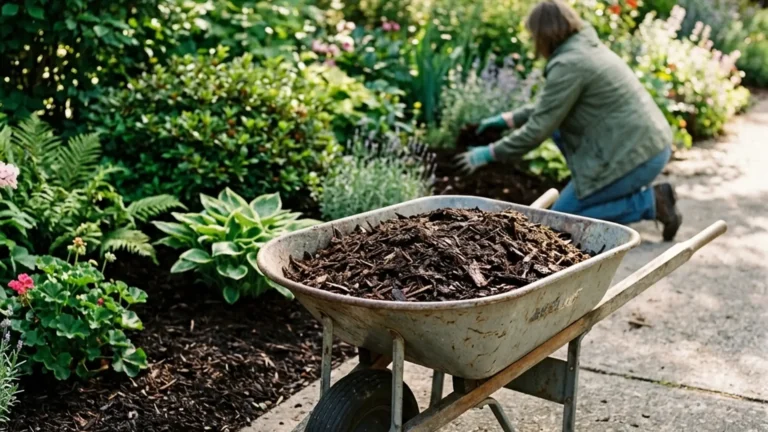
Apply on a dry, sunny day with no rain in the forecast for 24 hours. The dye needs to cure and bond before it gets wet, or some of it washes off onto driveways and walkways. Lay it after a good weeding and, ideally, after a deep watering so you are sealing moisture in rather than capping dry soil.
The Nitrogen Trade-Off and How to Manage It
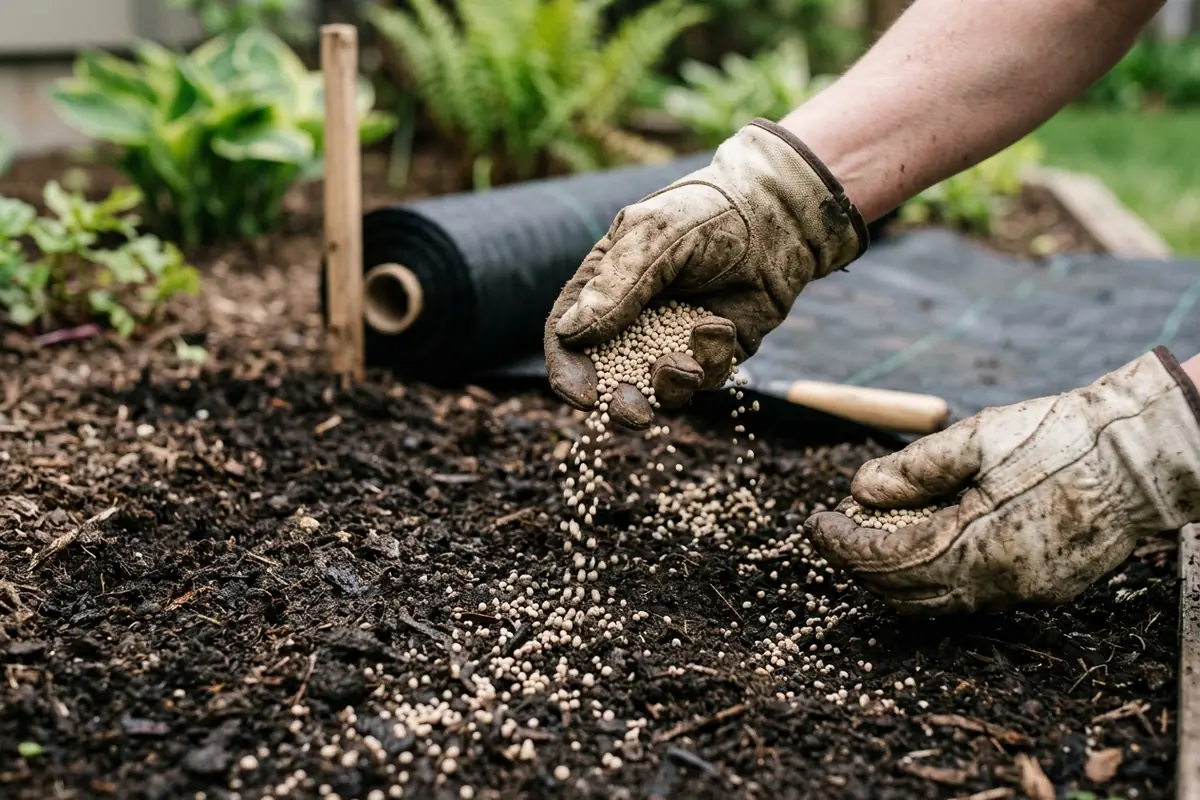
As wood mulch breaks down, the microbes doing the work pull nitrogen from the very top layer of soil to fuel decomposition. This is real, but it is also overstated. The effect is confined to the thin boundary where mulch meets soil, not the root zone where your plants actually feed. For established shrubs and perennials it rarely matters. Where it does show up is around shallow-rooted annuals and seedlings, which can look pale or stall.
The fix is easy. Lay an inch of compost on the soil before you mulch, or side-dress with a balanced or slightly nitrogen-forward fertilizer in spring. If you see yellowing leaves on young plants near fresh mulch, a light nitrogen feed usually greens them up within a week or two. Blood meal works fast if you want an organic option; a measured dose of a 10-10-10 granular feed works too. Do not solve it by mixing wood mulch into the soil, which spreads the nitrogen draw through the whole root zone and makes the problem worse. The whole point of mulch is to sit on top of the soil, not in it, and keeping that line clean is what keeps the nitrogen effect harmless.
How to Refresh Faded Black Mulch
This is the question I get every August, and almost nobody writes about it. Black mulch fades. UV light breaks the pigment down, and within 9 to 12 months that crisp black goes flat gray-brown. You have three options, from cheapest to most thorough.
Fluff and turn it first. Before you spend a dime, rake the bed and turn the mulch over. The undersides have seen less sun and are often still dark. Half the time a good fluffing buys you another month and breaks up any matting that was shedding water.
Re-dye with mulch colorant. Spray-on mulch dye in a pump or hose-end sprayer restores the color for a fraction of the cost of new mulch. A quart concentrate covers a few thousand square feet. Apply on a dry day, keep it off siding and concrete because it stains, and let it cure for several hours before rain. This is what I do most years rather than buying fresh bags.
Top-dress with a thin new layer. If the old mulch has also thinned and decomposed, add a fresh inch on top rather than re-dyeing. Do not just keep piling on year after year, though, or you will exceed that 3 inch limit. Once the total depth creeps past 3 inches, rake the old material out and start fresh.
Black Mulch Versus Natural and Other Colors
Plain undyed bark mulch is the safer default for food gardens and for hot zones, and it is what I reach for around vegetables and new transplants. Brown dyed mulch warms soil less aggressively than black, so it is a reasonable middle ground in zones 7 and 8 where you want a finished look without the full heat penalty. Red dyed mulch is purely cosmetic and, to my eye, fights with most plant colors. Black wins on contrast and on early-spring warming in cool climates. That is the honest trade: black gives you the best look and the most heat, and heat is either your friend or your enemy depending on where you stand.
If your goal is feeding the soil more than dressing it up, undyed wood chips or shredded leaves break down faster and add more organic matter. Mulch choice is rarely just about looks once you account for what is growing underneath. A pollinator border, for instance, can sit happily on natural mulch, and if you are planning one of those, our guide to the best plants for bees pairs well with a simple bark mulch. For a backyard with young trees, the same depth and no-volcano rules apply whether the mulch is black or brown, and our notes on native trees and shrubs cover what to plant before you mulch around it.
Frequently Asked Questions
Is black mulch bad for plants?
A certified, clean-wood black mulch applied 2 to 3 inches deep is not bad for plants in cool and temperate zones. It becomes a problem in two situations: when the wood base is contaminated reclaimed lumber, and when the heat it absorbs scorches shallow roots in hot climates. Choose certified mulch, keep the layer to 3 inches, and match it to your zone.
Does black mulch get too hot?
It can. The dark color absorbs sunlight, so the surface runs hotter than natural mulch, especially in zones 9 to 11 during summer. Around established, deep-rooted shrubs this is fine. Around seedlings, annuals, and shallow-rooted plants in hot regions it can stress or burn roots, so keep the layer thin or use a lighter mulch there.
How long does black mulch keep its color?
Roughly 9 to 12 months before UV light fades it to gray-brown. You can stretch that by fluffing and turning the mulch, or restore it for a season with spray-on mulch colorant rather than buying new bags.
Is the dye in black mulch safe?
The common colorants, iron oxide and carbon black, are inert and not the real concern. The genuine risk is the wood underneath if it came from CCA-treated reclaimed lumber. Buy mulch certified by the Mulch and Soil Council or labeled as clean sawmill or forest-product wood, and the dye itself is not a meaningful hazard for ornamental beds.
How deep should I spread black mulch?
Two to three inches. Thinner lets weeds through and looks patchy; thicker smothers roots and holds too much moisture. Always leave a few inches of bare space around trunks and stems, and never pile it into a volcano cone against a tree.
Can I use black mulch in a vegetable garden?
You can, if it is certified clean-wood mulch, but I usually do not. Around food crops I prefer undyed bark, straw, or leaf mulch out of caution, and because vegetables are often shallow-rooted annuals that dislike the extra heat. Save black mulch for ornamental beds and borders.
Bottom Line
Black mulch is a good-looking, budget-friendly mulch that earns its place in cool and temperate gardens, where its heat-absorbing color actually helps soil warm up in spring. The two things that decide whether it works for you are your USDA zone and the quality of the wood in the bag. Match it to a zone where the heat is welcome, buy certified clean-wood product, lay it 2 to 3 inches deep with a gap around every stem, and refresh the color with a turn of the rake or a quick re-dye instead of constant new bags. Do that and the only thing your neighbors will notice is how sharp the beds look.