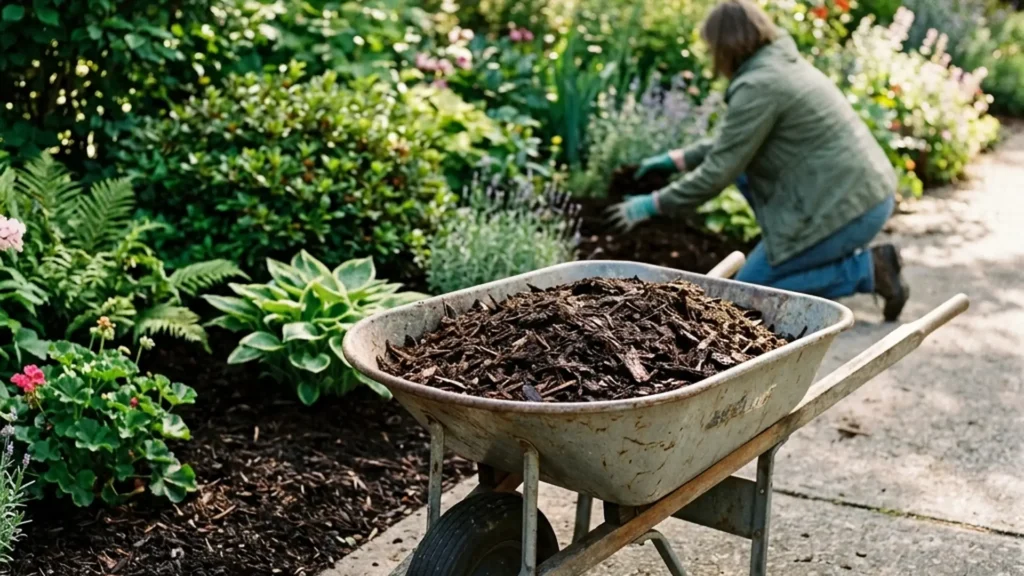
How many bags of mulch in a yard? It is 13.5 bags if your bags are the common 2 cubic foot size, which most people round up to 14. That is the answer everyone wants, and it is correct, but it hides a trap: not every bag is 2 cubic feet. Soil and compost often come in 1 or 1.5 cubic foot bags, and the conversion changes completely. Get the bag size wrong and you under-order by a third without realizing it. I have watched a neighbor buy what she thought was a yard of compost and come up far short because the bags were 1 cubic foot, not 2. This guide gives you the exact count for every bag size, what a yard of bags weighs to haul, how many fit on a pallet, and the price point where bulk finally beats bagged.
If you only remember one thing, remember to read the cubic-foot number on the bag before you do any math. Everything else flows from that single number.
The Quick Answer for Every Bag Size
A cubic yard is 27 cubic feet. To find how many bags make a yard, divide 27 by the cubic feet printed on the bag. That is the whole formula. Here is the result for every size you are likely to see on a store shelf.
| Bag size | Bags per cubic yard | Common product |
|---|---|---|
| 2 cu ft | 13.5 (round to 14) | Most wood and bark mulch |
| 3 cu ft | 9 | Bulkier bagged mulch |
| 1.5 cu ft | 18 | Many soils and composts |
| 1 cu ft | 27 | Premium soils, amendments |
The 2 cubic foot bag is the default for wood mulch, so 13.5 bags per yard is the number most gardeners need. But the moment you switch to compost, topsoil, or a soil-mulch blend, check the bag again. Those products frequently come in 1 or 1.5 cubic foot bags, which means you need 18 or 27 bags to equal one yard, not 14. That is the single most common ordering mistake, and it is entirely avoidable.
Why the Bag Size Trap Catches People
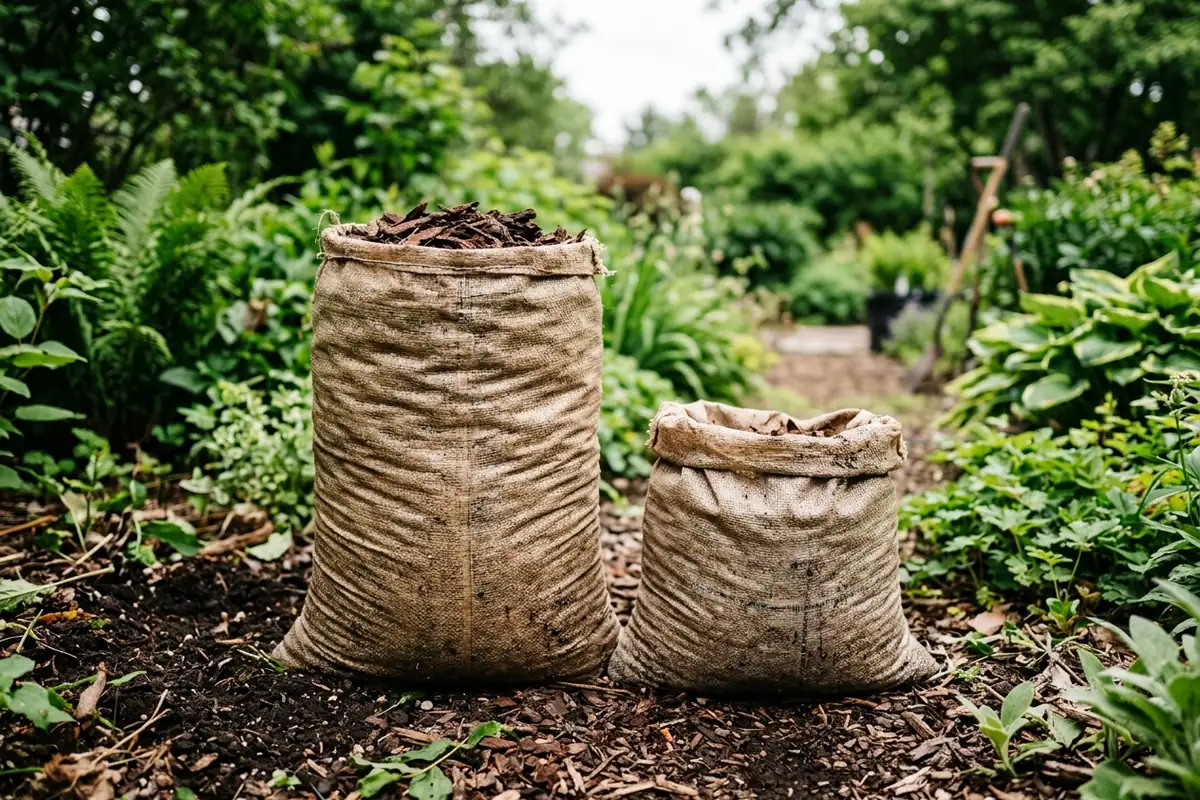
Stores stack mulch, soil, and compost in the same aisle, often on the same kind of plastic bag, and the human eye reads them as interchangeable. They are not. A pallet of mulch bags and a pallet of compost bags can look identical from ten feet away while holding very different volumes. The cubic-foot figure is usually printed small, sometimes on the bottom edge, and it is the only number that matters for the conversion.
So build one habit: before you multiply anything, find the cubic feet on the bag and write it down. If you are mixing products, say mulch for the beds and compost for the vegetable rows, do the math separately for each because their bag sizes almost certainly differ. One number, checked once, saves a second trip to the store.
How Much Does a Yard of Bagged Mulch Weigh?
Nobody mentions the weight until you are loading the cart, so here it is up front. A single 2 cubic foot bag of dry wood mulch weighs roughly 20 pounds. Multiply by 13.5 bags and a full yard of bagged mulch is about 270 pounds you have to lift twice, once into the cart and once out of the car. Wet mulch weighs noticeably more, since wood soaks up water. Compost and soil are heavier still per bag, often 40 pounds or more for a 1.5 cubic foot bag, which is why a yard of bagged compost can be a real workout.
| Product | Approx. weight per bag | Approx. weight per yard (bagged) |
|---|---|---|
| Wood mulch, 2 cu ft | about 20 lb dry | about 270 lb |
| Compost, 1.5 cu ft | about 40 lb | about 720 lb |
| Topsoil, 1 cu ft | about 35-40 lb | about 950 lb-plus |
The practical takeaway: a car or small SUV handles a few bags fine, but a full yard in bags strains both the vehicle and your back. Once you are buying a yard or more, the weight alone starts arguing for bulk delivery.
How Many Bags Fit on a Pallet?
This is the question stores never volunteer and that changes your whole order. Bagged mulch usually ships on pallets, and a pallet of 2 cubic foot bags commonly holds 60 to 70 bags. Do the division: 60 bags divided by 13.5 is about 4.5 yards, and 70 bags is closer to 5 yards. So one pallet of standard mulch is roughly four and a half to five cubic yards of material.
That matters because many stores sell pallets at a discount over individual bags, and a pallet often lands in the same ballpark as bulk delivery for medium-size jobs. If you need four or five yards and have somewhere to stage 60-plus bags, a discounted pallet can be the sweet spot: bagged convenience at near-bulk pricing. Just confirm the bag count on that specific pallet, since it varies by brand and bag size.
There is a logistics angle too. A pallet delivered to your driveway means you skip loading 60 bags into a car one by one, but you still have to move them to the beds and deal with the empty plastic afterward. Some stores deliver pallets for a flat fee, others only for orders above a threshold. Ask before you assume. And remember a full pallet is heavy enough that the truck will set it down where the driver can reach with a forklift or pallet jack, which may not be next to your beds. Factor in the carry, the same way you would with a bulk pile.
Does the Mulch Type Change the Bag Count?
The bag-count math is pure volume, so it does not change with the material: a 2 cubic foot bag is 2 cubic feet whether it holds cedar, dyed hardwood, or pine bark. What does change is the weight per bag and how the product settles. Finely shredded mulch packs denser and feels heavier per bag than chunky bark nuggets, even at the same labeled volume, and that affects how many you can carry, not how many you need.
Settling is the subtler factor. Bagged mulch is compressed in the bag and fluffs up when you open and spread it, so a yard’s worth of bags often covers a touch more than a yard of already-fluffed bulk. It is a small effect, but it is one reason I do not stress over the half-bag in 13.5; the fluffing tends to make up the difference. The labeled cubic footage is what you order to, and the material only matters for how heavy the trip is and how the mulch behaves once it is down.
Small Jobs, Containers, and Single Beds
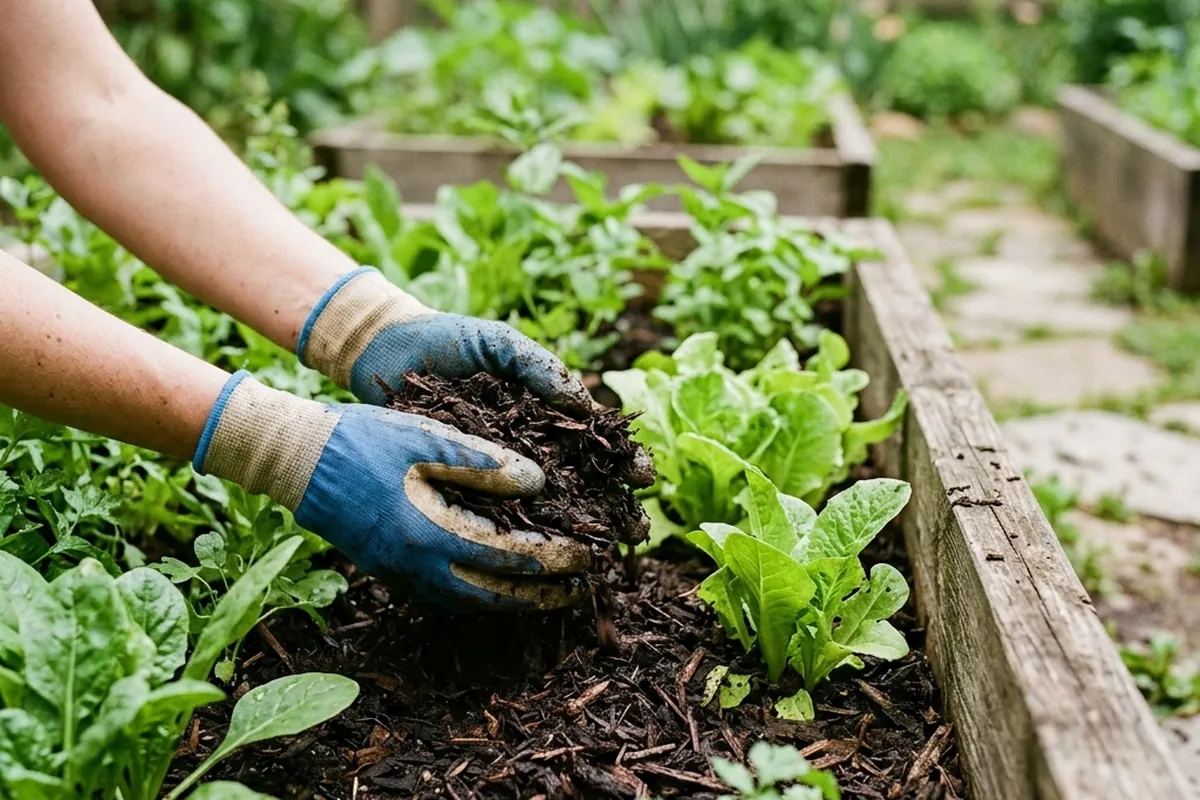
Not every project needs a yard, and for small jobs bags are almost always the right call. A single container or a narrow border might need only a bag or two, and buying loose bulk for that is wasteful. Here the conversion runs in reverse: figure your square footage and depth, find the cubic feet you need, and divide by the bag size to get a bag count, usually a small number you can carry in one trip.
For a quick reference, a single 2 cubic foot bag of mulch covers about 12 square feet at 2 inches deep or 8 square feet at 3 inches. So a 24 square foot bed at 3 inches needs about 3 bags. A couple of large containers might take a single bag between them. When the answer is under about 8 to 10 bags, skip the yard math entirely and just buy bags, since you will not hit the price or volume where bulk pays off. The bag-per-yard number only becomes useful once the job is big enough to consider buying in bulk.
Bagged Versus Bulk: The Real Break-Even
Here is the calculation the competitors mention but never finish. To compare honestly, multiply the per-bag price by 13.5 and set it against the delivered price of a bulk yard. Say bags run 4 dollars each. Times 13.5, that is 54 dollars for a yard’s worth of bags. If a bulk yard delivered costs 40 to 50 dollars, bulk wins outright, and you skip 14 plastic bags. If bags are on deep sale at 2.50 each, that is about 34 dollars a yard, and bagged can edge out bulk once you add a delivery fee.
The rule I use: run the per-bag price times 13.5, add nothing for bulk’s plastic and hauling hassle, and compare to delivered bulk. For anything over about a yard, bulk almost always wins on price. Under a yard, or when you have no place for a loose pile and no way to move it, bags win on convenience even at a slight premium. The break-even is rarely about a few dollars; it is about whether you can stage and spread a loose pile at all.
A Worked Ordering Example
Let me run a real order to show the bag size trap in action. Suppose I am topping three beds that total 300 square feet, at 3 inches deep. At 3 inches, a yard covers about 108 square feet, so 300 divided by 108 is about 2.8 yards. I round to 3 yards. Now convert to bags: 3 yards times 13.5 is about 40 bags of 2 cubic foot mulch.
But say I also want to work an inch of compost into one of those beds first, a 50 square foot bed, which needs about 0.15 of a yard of compost. The compost comes in 1.5 cubic foot bags, so a yard is 18 bags, and 0.15 of a yard is about 3 bags. If I had assumed the compost was also 2 cubic feet per bag, I would have bought 2 bags and come up short. Two products, two bag sizes, two separate calculations. That is the entire discipline.
It also helps to write the order out as a short list before you leave: 40 bags of 2 cubic foot mulch, 3 bags of 1.5 cubic foot compost. Seeing the two different bag sizes side by side on paper is what stops the autopilot mistake of treating every bag as 2 cubic feet. I jot it on my phone and check it against the shelf tags in the store, because the printed cubic-foot number on the actual product sometimes differs from what I assumed at home. Thirty seconds of checking beats a half-finished bed and a second trip across town.
Rounding and Buffer Tips
A few habits keep you from a second trip. Always round 13.5 up to 14 for a full yard, because half a bag does not exist and you will use the extra. Add a 10 percent buffer for settling, spillage, and the bed you forgot. Buy a little extra rather than a little short, since topping up later means another trip and possibly a different color batch. And keep one unopened bag in reserve through the season; mulch thins as it decomposes, and a single bag patches the worst spots in late summer.
If you want the math done for you, the Old Farmer’s Almanac mulch calculator converts your bed size into both cubic yards and bag counts, and it lets you set the bag size so the soil-versus-mulch difference is handled automatically. For the why behind mulching at all, the University of Minnesota Extension covers how the right depth conserves moisture and suppresses weeds, which is what your bag count is ultimately buying.
Mulch is usually the finishing touch on a planting, so it pays to get the bed right first. If you are mulching a new tree or shrub, our guide to native trees and shrubs covers what to plant before you ring it, and if your beds sit beside turf, the edging habits in our piece on small garden lawn care keep grass from creeping into the mulch you just paid for.
Frequently Asked Questions
How many bags of mulch are in a yard?
About 13.5 bags if they are the common 2 cubic foot size, usually rounded up to 14. A cubic yard is 27 cubic feet, so you divide 27 by the bag size. For 3 cubic foot bags it is 9 per yard, for 1.5 cubic foot bags it is 18, and for 1 cubic foot bags it is 27.
How many 2 cubic foot bags make a yard?
Thirteen and a half, which most people round to 14. This is the standard wood-mulch bag, so 14 bags is the number to plan on for a full yard of typical bagged mulch.
Why does compost need more bags per yard than mulch?
Because compost and soil often come in smaller 1 or 1.5 cubic foot bags rather than the 2 cubic foot mulch bag. A yard of 1.5 cubic foot compost is 18 bags, and a yard of 1 cubic foot soil is 27 bags. Always check the cubic-foot figure before converting.
How much does a yard of bagged mulch weigh?
About 270 pounds for dry wood mulch, spread across roughly 13.5 bags of about 20 pounds each. Wet mulch and bagged compost or soil weigh considerably more, which is why a full yard in bags is heavy to haul and a point in favor of bulk delivery.
How many bags of mulch are on a pallet?
A pallet of 2 cubic foot bags typically holds 60 to 70 bags, which works out to roughly 4.5 to 5 cubic yards. Pallet pricing is often discounted, so for medium jobs a pallet can compete with bulk delivery on cost.
Is it cheaper to buy bags or a bulk yard?
Multiply the per-bag price by 13.5 and compare to the delivered bulk price. Bulk usually wins for a yard or more, and you avoid the plastic. Bags win for small jobs, easy storage, and when you have no place to dump a loose pile.
Bottom Line
How many bags of mulch in a yard is 13.5 for standard 2 cubic foot bags, rounded to 14, but the real lesson is to read the bag before you do the math, because compost and soil in smaller bags need 18 or 27 to make a yard. Weigh the haul, a full yard of bagged mulch is about 270 pounds, check whether a discounted pallet of 60 to 70 bags beats both individual bags and bulk, and run the per-bag price times 13.5 against delivered bulk before you decide. Nail those numbers and you buy exactly enough, in the cheapest sensible form, in one trip. The whole calculation takes a minute once you have the bag size in hand, and that minute is the difference between a finished bed and a frustrating drive back to the store for the bags you came up short on. Measure your beds, read the cubic feet on the bag, multiply, and round up. That is all there is to it.