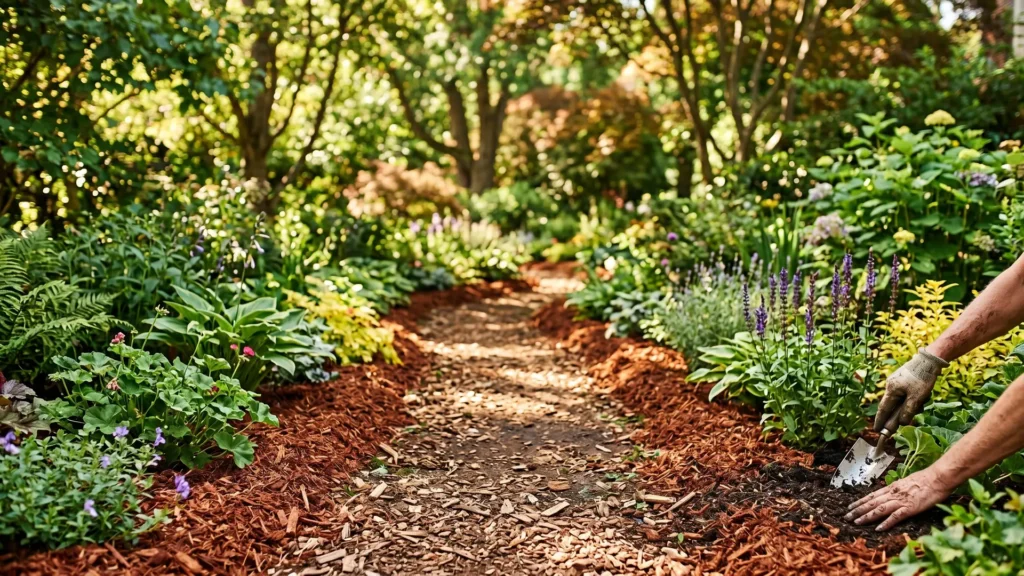
Cedar mulch is shredded or chipped cedar wood and bark that lasts longer than most mulches, smells like a fresh-cut forest, and carries natural oils that bugs tend to avoid. That is the short version, and it is mostly good news. But cedar is also the one mulch I tell people to think twice about before they spread it everywhere, because the same oils that repel pests can hold back direct-sown seedlings, and the slow decay that makes it economical also means it feeds your soil very slowly. Used in the right spot, cedar is one of the best mulches money can buy. Used in the wrong spot, it quietly works against you.
I have run cedar around foundation shrubs and pathways for years and loved it, and I have also watched it stunt a row of carrots I should have known better than to sow under it. This guide covers what cedar mulch actually does, the allelopathy question everyone gets wrong, which plants and zones suit it, how deep to lay it, how long the color lasts, and how it stacks up against hardwood, pine, and straw. By the end you will know exactly where to put it and where to leave it in the bag.
What Cedar Mulch Is and Why It Lasts
Cedar mulch comes from cedar and juniper species, shredded into stringy strands or chipped into chunks. Two things set it apart from generic hardwood mulch. First, cedar heartwood contains natural oils and compounds, including thujone and cedrol, that give it that distinctive scent and resist rot. Second, because the wood resists decay, it breaks down slowly, so a single application can hold its job for two to three seasons rather than one.
That durability is the headline benefit. You buy less mulch over time, you top-dress less often, and the bed stays covered through more of the year. Over a three-year span, cedar can work out cheaper per season than a hardwood mulch you replace every spring, even though the bag costs more up front. That is the math worth running before you balk at the price tag. The aromatic oils are the second draw. The smell is pleasant to most people and genuinely unpleasant to a long list of insects, which is why cedar shows up in closets and chests as well as gardens.
There is one practical wrinkle with the stringy shredded form. Cedar shreds knit together into a mat, which is great on a slope because it resists washing away in a downpour, but that same mat can start to shed water after a year if you never disturb it. A quick rake each spring breaks the crust and lets rain soak through to the soil instead of running off. Chipped cedar, by contrast, stays loose and drains freely but scatters more easily on a windy site. Pick the form to match your conditions: shreds for slopes and wind, chips for flat beds you want to look chunky and neat.
The Real Benefits of Cedar Mulch
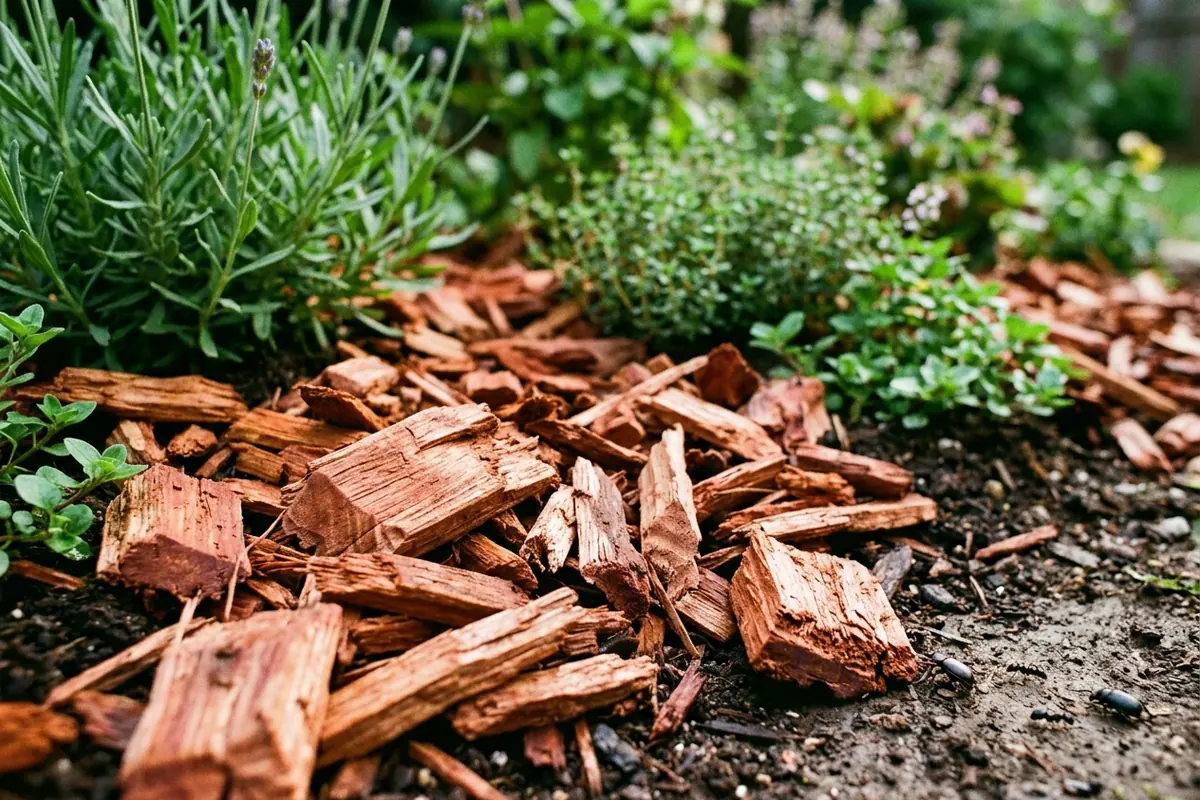
Strip away the marketing and cedar earns its price on a few honest points. It suppresses weeds by blocking light, like any mulch laid 2 to 3 inches deep. It holds soil moisture so you water less. It moderates soil temperature, keeping roots cooler in summer and buffering cold snaps in fall. The University of Minnesota Extension notes that organic mulches like shredded bark conserve moisture, limit weed emergence by blocking light, and improve soil as they break down. Cedar does all of that, just more slowly on the last point.
Its pest-deterrent reputation is real but oversold. The oils do discourage ants, moths, some beetles, and certain other crawling insects from settling into the mulch layer. What cedar does not do is form a force field. It will not clear an established infestation, and the repellent effect weakens as the volatile oils off-gas over the first season. Treat it as a mild, fading bonus, not a pest-control strategy.
The Allelopathy Question Everyone Gets Wrong
Here is where most cedar articles either ignore the issue or scare you off entirely, and both are wrong. Cedar contains compounds that can inhibit seed germination on contact. This is a surface effect from the oils, and it matters in exactly one situation: when you sow seeds directly into ground covered by cedar, or lay cedar over a freshly seeded bed.
So the rule is simple. Cedar is risky over direct-sown seedbeds and fine around established plants. If you broadcast carrot, lettuce, spinach, beet, or radish seed and then mulch with cedar, you can knock down your germination rate, the same way it knocks down weed seeds. The mulch cannot tell a carrot seed from a crabgrass seed. But once a plant is rooted and growing, cedar around it causes no allelopathic harm. The oils act at the soil surface on tiny emerging seeds, not on the roots of an established tomato or a mature shrub.
What I do: I never sow seed under cedar. For transplants, vegetables started in cell packs and set out as plugs, cedar is fine as long as I keep it pulled back an inch or two from the stems. For pure ornamental beds of established perennials and shrubs, cedar is one of my first choices and the allelopathy question is irrelevant.
It is worth being precise about what allelopathy is and is not here, because gardeners pass around two opposite myths. One camp insists cedar poisons the soil and kills everything, which is flat wrong. The other camp says allelopathy is a complete myth, which is also wrong. The truth sits in the middle: cedar’s surface oils have a measurable germination-suppressing effect on small seeds sitting at the soil surface, and essentially no effect on the roots of plants already growing. Once you understand it is a seed-surface phenomenon, the whole confusion dissolves. You manage it by controlling one variable, whether or not seeds are exposed to the fresh mulch, and you stop worrying about the rest.
Where Cedar Mulch Backfires
Beyond the seedbed problem, cedar has three honest drawbacks. The first is the slow nutrient release that mirrors its slow decay. Faster mulches like straw or compost build organic matter and feed soil biology quickly; cedar does it at a crawl. If your soil is poor and you want to improve it this season, cedar is the wrong tool. Lay compost first and use cedar only as a decorative, weed-blocking top layer.
The second is its effect on beneficial insects. The same oils that repel pests can discourage ground beetles and other helpful bugs from settling in, and a heavy cedar layer over a pollinator-focused bed is not ideal. If you are building habitat, lean toward natural bark or leaf mulch. For a bee-friendly planting, our notes on the best plants for bees pair better with a low-odor mulch than with fresh cedar.
The third is sour mulch, which is not unique to cedar but worth flagging. If any wood mulch is stored in a big wet pile, it can ferment and turn anaerobic. Wisconsin Horticulture warns that mulch smelling of vinegar, ammonia, or sulfur is sour mulch and should be removed, because it can yellow and kill foliage on contact. Smell your bags. Fresh cedar smells like cedar; sour mulch smells wrong. Air it out for a day or two before use, or return it. This is most likely with cheap bulk mulch bought from a vendor whose pile has been sitting all season, so if you are buying loose cedar by the yard, ask how recently it was ground and turned.
Cedar Mulch by USDA Zone and Season
Cedar is more forgiving across zones than dark dyed mulch because its light color reflects rather than absorbs heat, so it does not cook roots the way black mulch can in hot regions. Still, timing and placement matter.
| Zone / season | Cedar guidance |
|---|---|
| Zones 3-5 | Excellent for shrubs and perennials; apply in late spring after soil warms so it does not keep cold soil cold. |
| Zones 6-7 | Ideal all-around mulch for ornamental beds and foundation plantings. |
| Zones 8-11 | Its light color and slow decay handle heat well; a good fit where dark mulch overheats. |
| Any zone, spring seedbeds | Avoid over direct-sown seeds; mulch only after seedlings are up and established. |
In any zone, apply cedar after the ground has warmed in spring rather than over frozen or cold soil, since an early thick layer can insulate cold into the root zone and delay growth. In fall, a fresh layer helps buffer temperature swings around perennials. The fall application is one I rely on heavily in colder zones, because cedar’s slow decay means it is still intact and insulating come the freeze-thaw cycles of late winter, when bare crowns get heaved out of the ground by repeated thawing. A steady cedar blanket dampens those swings and keeps roots anchored. If you garden somewhere with hard winters, think of the fall cedar layer as crown protection first and weed control second.
How to Apply Cedar Mulch
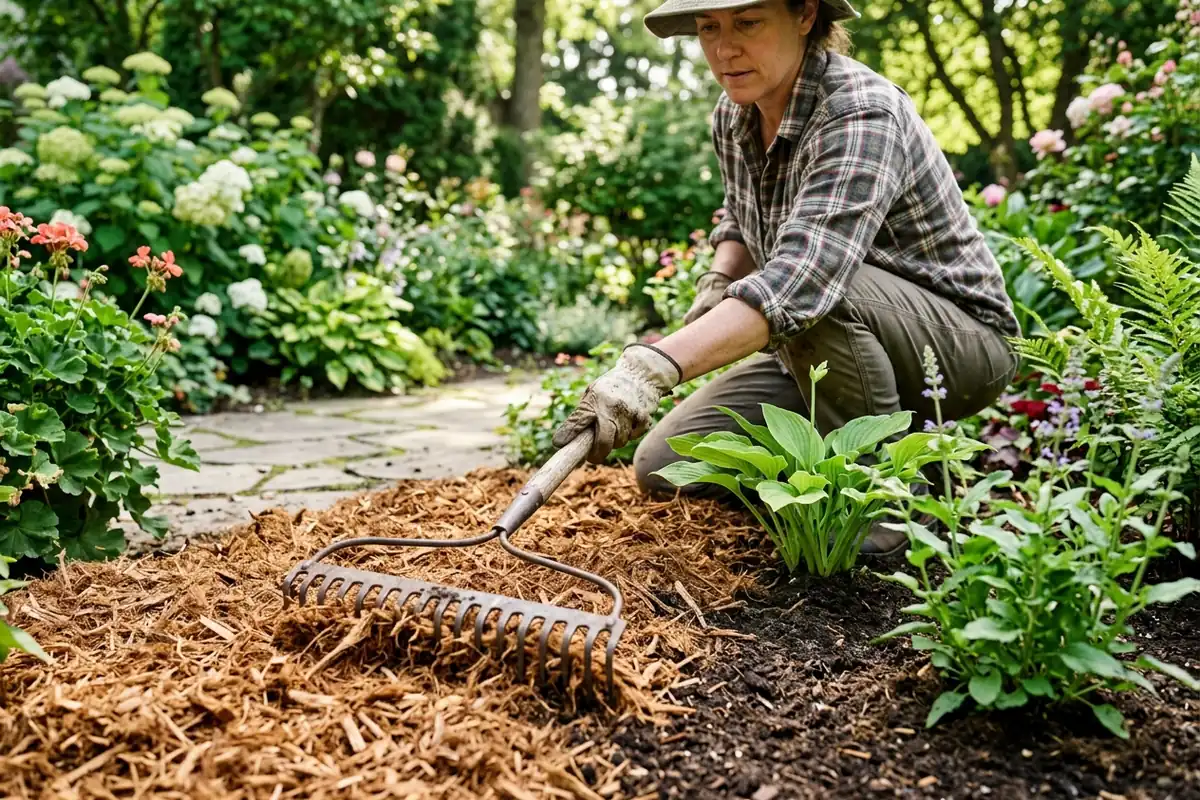
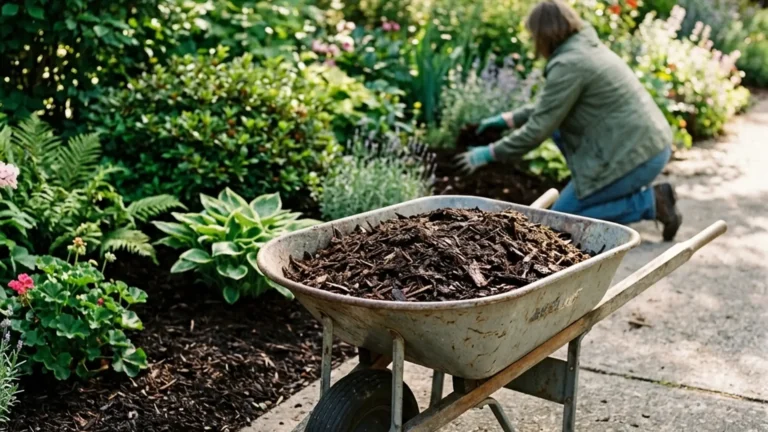
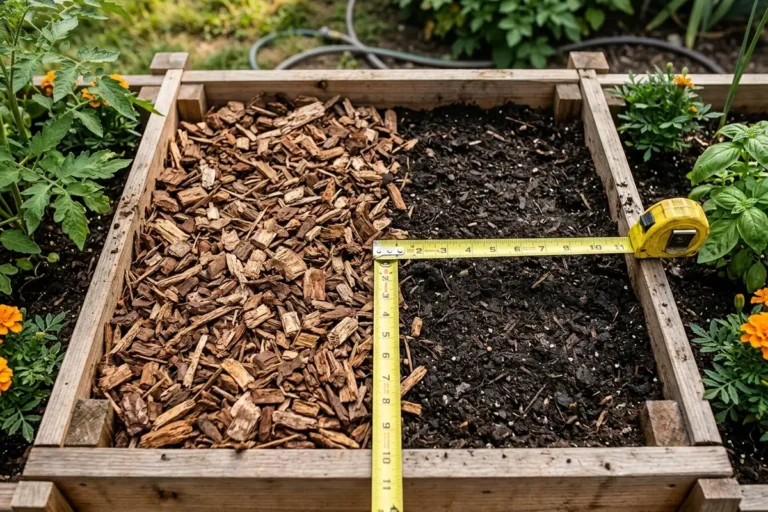
Spread shredded cedar 2 to 3 inches deep over weeded soil. Chunkier cedar chips can go to 3 inches; fine shredded cedar holds together at 2. Less than 2 inches lets weeds and light through; more than 3 starts to smother roots and shed water instead of soaking it in. Keep a clear gap of a few inches around every trunk and stem. Never build a mulch volcano against a tree, which traps moisture against bark and invites rot.
For coverage, a 2 cubic foot bag covers roughly 12 square feet at 2 inches or 8 square feet at 3 inches. Plan accordingly.
| Bed size | Bags (2 cu ft) at 2 in | Bags (2 cu ft) at 3 in |
|---|---|---|
| 50 sq ft | about 4 | about 6 |
| 100 sq ft | about 8 | about 12 |
| 200 sq ft | about 16 | about 24 |
Apply on a dry day. Water the bed first if the soil is dry, so you trap moisture in rather than capping dry ground. Fluff existing cedar with a rake before adding new material, since cedar shreds can mat and start repelling water after a season.
Color, Fading, and Refreshing
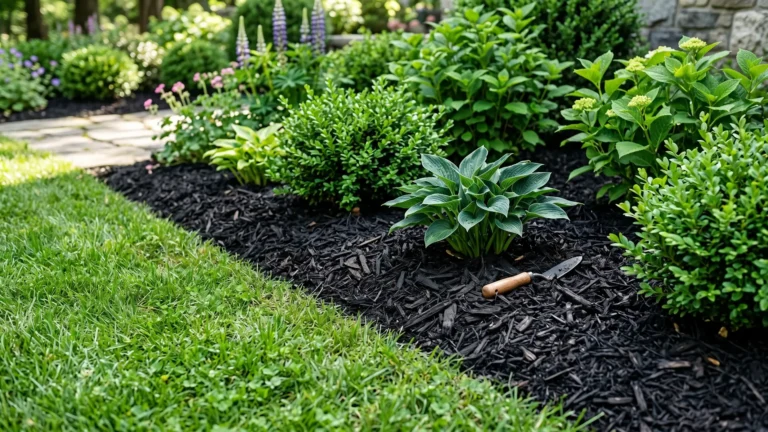
Natural cedar goes in a warm blonde with a reddish tint and weathers to a soft silvery gray within a few months of sun exposure. That gray is purely cosmetic; the mulch is still doing its job. Some gardeners love the weathered look, and I am one of them. If you want the fresh color back, two options work: rake and turn the mulch so the less-faded undersides show, or top-dress with a thin new inch. Because cedar lasts so long, you rarely need to replace the whole layer; you are usually just restoring color, not function. Avoid dyed cedar if you can, since the dye adds cost and a contamination question without improving how the mulch performs. Natural cedar is already attractive on its own, and paying extra to dye a premium mulch a color it will fade out of anyway makes little sense. If you genuinely want a permanent dark look, that is an argument for a different product, not for dyed cedar. My advice is to buy natural, let it silver, and rake it once a year. That single habit keeps a cedar bed looking intentional for years on one purchase.
Cedar Versus Other Mulches
No mulch is best for everything. Here is how cedar compares to the three other materials I reach for most, so you can match the mulch to the job.
| Mulch | Lifespan | Feeds soil | Best use |
|---|---|---|---|
| Cedar | 2-3 seasons | Slowly | Ornamental beds, paths, foundation shrubs |
| Hardwood bark | 1-2 seasons | Moderately | General beds, soil-building over time |
| Pine bark / needles | 1-2 seasons | Moderately | Acid-loving plants, slopes (needles knit well) |
| Straw | 1 season | Quickly | Vegetable beds, seedlings, fast soil-building |
For a vegetable garden, my honest pick is a compost base topped with straw, which feeds the soil and skips the allelopathy worry entirely. Save cedar for the ornamental and structural parts of the yard where its longevity and looks pay off. The same care rules around woody plants apply no matter which mulch you choose, and if you are mulching around young trees, our guide to native trees and shrubs covers what to plant before you ring it with cedar.
Frequently Asked Questions
Is cedar mulch bad for plants?
No, not for established plants. Cedar around rooted transplants, perennials, and shrubs is safe and long-lasting. The one real risk is laying cedar over a direct-sown seedbed, where its oils can inhibit seed germination. Keep cedar off seedbeds and pulled back from stems, and it is a fine mulch.
Does cedar mulch really repel bugs?
Partly. Cedar oils discourage ants, moths, and some beetles from settling in the mulch, but the effect is mild and fades over the first season as the oils off-gas. It will not cure an infestation. Treat pest deterrence as a small bonus, not a control method.
Can I use cedar mulch in a vegetable garden?
Around established vegetable transplants, yes, kept off the stems. Over direct-sown crops like carrots, lettuce, spinach, or beets, no, because cedar can suppress those seeds along with the weeds. For most vegetable beds I prefer a compost base topped with straw, which feeds the soil faster and avoids the issue.
How long does cedar mulch last?
Two to three seasons, longer than most wood mulches, because cedar resists decay. The color fades to gray within a few months, but the mulch keeps working. You usually refresh the look rather than replace the whole layer.
How deep should cedar mulch be?
Two to three inches over weeded soil. Thinner lets weeds and light through; thicker smothers roots and sheds water. Always leave a gap of a few inches around trunks and stems, and never pile it into a cone against a tree.
Does cedar mulch attract termites?
No. Cedar is one of the more termite-resistant mulches because of its natural oils, which is the opposite of attracting them. As with any mulch, just keep it a few inches away from your home’s foundation and siding so it does not bridge moisture to the structure.
Bottom Line
Cedar mulch is a long-lasting, good-looking mulch that pays for itself in ornamental beds, around shrubs, and along paths, where its durability and faint pest deterrence are exactly what you want. The two things to remember are that it feeds soil slowly, so it is not a soil-building tool, and that its oils can suppress direct-sown seeds, so keep it off seedbeds. Match cedar to established plantings, lay it 2 to 3 inches deep with a gap around every stem, and let the color weather to gray without worry. Put it in the right place and it is one of the lowest-maintenance mulches you can buy, and one of the few that genuinely rewards you for buying the more expensive bag instead of the cheap one.