Pull behind lawn aerator shoppers keep hitting the same wall. Search the term and the first page fills with product listings and rental counters, not straight answers about depth, timing, or which tine actually helps. That gap matters, because the wrong tool can pack your soil tighter instead of loosening it. Here the hardware specs and the agronomy sit in one place: what a pull behind lawn aerator does well, which towed models carry real numbers behind them, and how university turf programs say to run one. Aerate at the wrong moment and a spring pass can wake dormant weed seeds, which is one more reason for spotting crabgrass before it spreads and reading the soil before you hook anything up.
Quick answer: a pull behind lawn aerator is a towed implement, pulled by a riding mower or tractor, that either punches holes with solid spikes or pulls soil cores with hollow tines. Turf specialists favor the core (plug) type, because solid spikes can press soil tighter rather than relieve it. Aim for 20 to 40 holes per square foot, cores about 3/4 inch across and 3 inches deep, worked into moist soil during active growth. Add weight to the tray so the tines reach 2 to 3 inches, make a couple of passes, then leave the cores where they fall to break down.
Before buying anything, it helps to know what problem you are actually solving. Compacted soil starves roots of air and water, thatch above a certain thickness chokes new growth, and heavy foot or vehicle traffic packs the top few inches into a crust that regular mowing does nothing to fix. A pull behind lawn aerator is built for exactly that job on a mid-size to large lawn, where a walk-behind unit would take an afternoon and a manual fork would take a weekend. The rest of this guide walks through the mechanism, the real specs behind actual towed models, the agronomy numbers that decide whether a pass worked, and the maintenance and hitching details that most buying guides skip entirely.
Spike vs plug: what a pull behind lawn aerator actually does
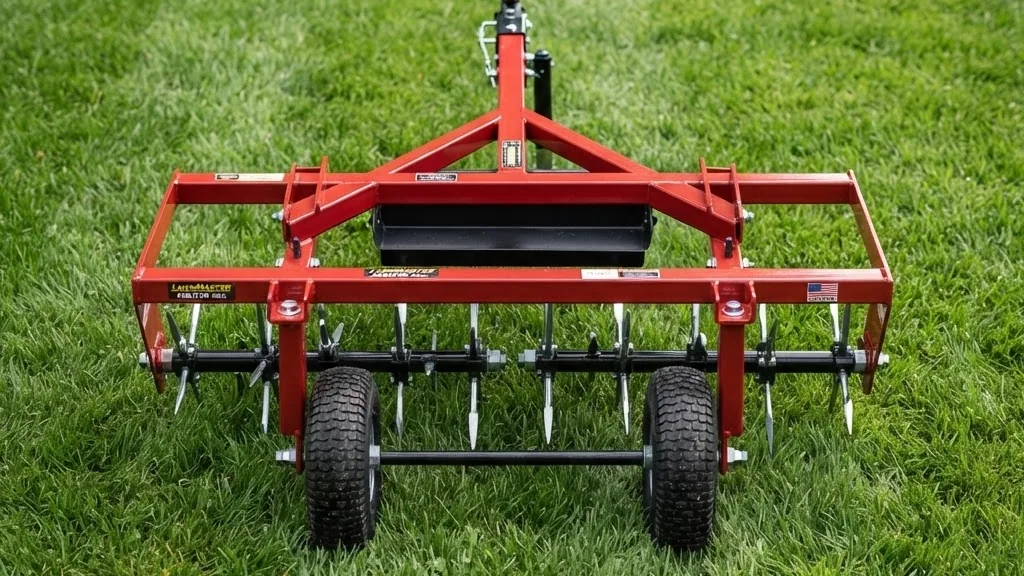
A towed aerator comes in two mechanisms. Spike models drive solid tines that make holes by shoving soil aside. Plug or core models use hollow tines that pull small cylinders of soil out and drop them on the surface. That single difference decides whether you loosen the ground or compact it further.
The distinction is the whole game. Iowa State University Extension and North Dakota State University Extension both flag that solid-spike devices can compact soil, since driving a peg into the ground presses the surrounding particles together. Hollow tines dodge that by removing material and opening a real channel for air, water, and roots. Michigan State University Extension puts a finer point on it for heavy ground: coring clay soils creates channels for gas and water exchange that a solid spike will not reproduce.
Spikes still sell, and they earn a place in narrow cases. On a small yard with light compaction, or sandy soil that drains freely, a spike unit does enough. Price helps too. The Ground Guys note that a tow-behind spike aerator starts at around 100 dollars, which is why it dominates the impulse-buy end of the market.
Plug wins once the numbers get serious. Angi’s comparison lines up with the extension view: core aeration outperforms spiking, the cores decompose on their own, and plug tools are the pick for large lawns and severe compaction. Pros lean almost entirely on core machines for the same reason.
- Reach for a spike unit when: the lawn is small, foot traffic is light, the soil runs sandy, and you mostly want a quick pass before overseeding.
- Reach for a plug unit when: the ground is clay-heavy or hard-packed, the lawn is large, compaction is severe, or the same worn strips fail year after year.
There is a middle case worth naming, because it trips up a lot of buyers: a lawn that looks fine on top but has a hardpan layer an inch or two down, often from a previous owner’s construction traffic or years of the same mower path. A spike pass on that lawn looks productive, since the surface dimples nicely, but it does nothing for the hardpan and can worsen it. If a lawn stays soggy after rain, drains slowly, or shows thin turf in the same spots every summer despite watering, that is a hardpan signature, and it calls for plug tines run at full depth rather than a light spike pass.
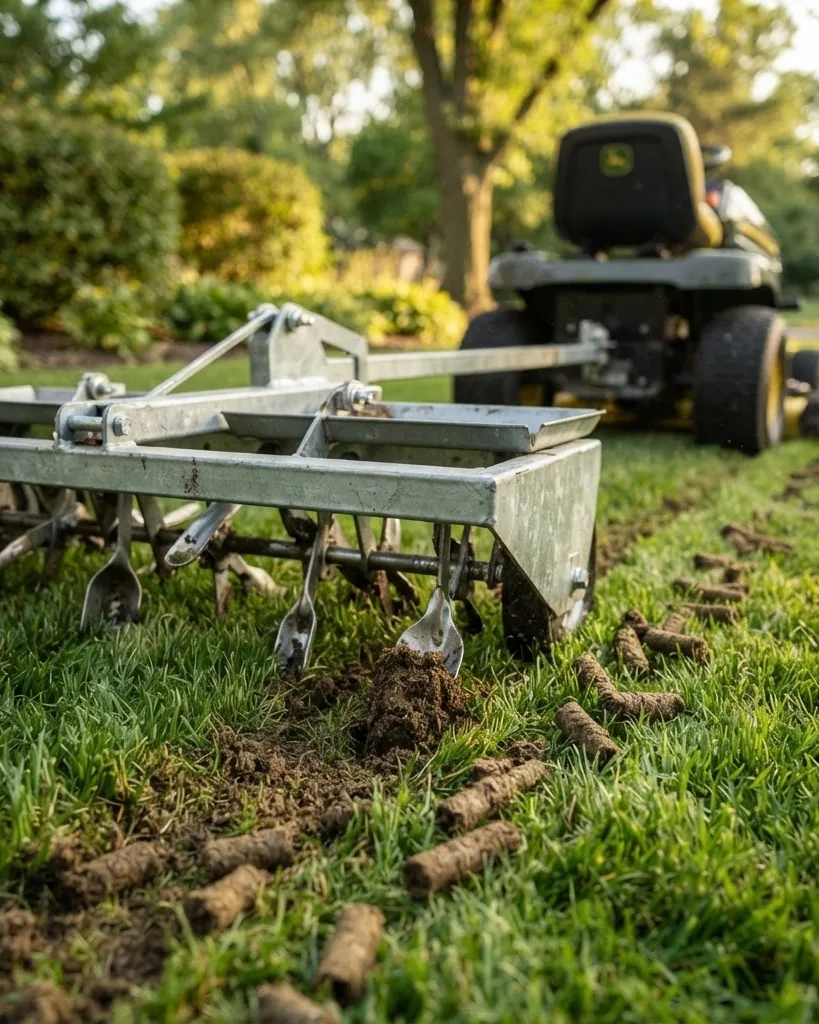
Real tow-behind models compared, spec by spec
Marketing rarely lists the numbers that matter. Working width sets how fast you cover ground, tine type sets whether you core or spike, and tray capacity sets how deep you can push. A handful of real towed units publish those figures, and they vary more than the listings suggest.
A drum-style spike aerator sold through Agri Supply runs 48 inches wide with 108 welded spikes, each 2-3/4 inches long, cutting slots about 2-1/2 inches deep from a 14-inch diameter drum. Its 32-gallon reservoir shifts weight from 143 pounds empty to 410 pounds filled with water. FIMCO builds a pair of 14-gauge folded-steel implements, the PLG-42 plug with 24 treated steel blades and the SPK-42 spike with 144 points. A budget Jiuni 32-inch model at Walmart spins eight star tines. Rental yards through Sunbelt Rentals stock heavier plug machines.
| Model | Type | Working width | Key specs |
|---|---|---|---|
| Agri Supply drum spike | Solid spike, drum | 48 in | 108 spikes, slots 2-1/2 in; 143 lb empty, 410 lb filled |
| FIMCO PLG-42 | Plug / core | not stated | 24 steel blades, cores up to 3 in deep; tray to 175 lb |
| FIMCO SPK-42 | Solid spike | not stated | 144 points, up to 2.5 in deep |
| Jiuni 32 in | Spike, star tines | 32 in | eight 9 in tines, up to 2 in; tray to 220 lb |
| 1st Products AERA-vator AE-40E | Vibrating tine | not stated | 8 holes/sq ft, 100 lb hitch pull, 577 lb |
Read those figures against your setup. The 48-inch drum covers ground fast but wants a real tractor once it holds 410 pounds of water. The FIMCO plug tray taking up to 175 pounds and the Jiuni tray taking up to 220 pounds tell you how much ballast each frame can carry before something bends. Sunbelt Rentals lists its towable units at 30 to 36 inches with as many as 48 coring tines, weighing roughly 250 pounds, which is more coring capacity than any homeowner spike.
The high end reads differently again. The 1st Products AERA-vator AE-40E hits a density of 8 holes per square foot, needs about 100 pounds of pull at the hitch in operation, carries up to 400 pounds of ballast, and weighs 577 pounds itself. On the retail category pages, brands like CRAFTSMAN, Landzie, Agri-Fab, and VEVOR fill out the middle, but few post depth or tine counts, so the spec sheet is where the real comparison happens.
Working width also decides how many passes a given lawn needs, and that math is easy to skip. A 32-inch unit like the Jiuni needs roughly 50 percent more passes than the 48-inch Agri Supply drum to cover the same acre, which adds up over a season of maintenance. If your lawn runs past half an acre, the wider machine usually wins on time even though it costs more up front and needs a heavier tow vehicle to pull it once the tray is loaded.
Hitching it up: tractor compatibility, tires and transport
A pull behind lawn aerator is only as useful as the machine towing it. Most towed units use a simple pin-and-clevis hitch sized for a standard riding mower or garden tractor drawbar, but the pull weight changes everything once the tray fills. The AERA-vator AE-40E needs about 100 pounds of continuous pull at the hitch during operation, which is well within range for most riding mowers above 18 horsepower, but a 410-pound loaded drum aerator is a different story and is better suited to a compact utility tractor.
Tire size on the aerator itself matters more than shoppers expect. Smaller pneumatic tires transfer more of the loaded weight straight down through the tines, which helps penetration on firm ground but can rut a soft or newly seeded lawn. Wider tires spread that weight out and reduce rutting, at the cost of slightly shallower cores on hard soil. If your lawn slopes or has soft low spots, favor a model with wider tires and add ballast gradually rather than maxing out the tray on the first pass.
Transport is the detail most buying guides skip. A loaded aerator should never be towed at full ballast between sites; drain the reservoir or remove the weights before moving it on a trailer or down a road, since the hitch pin and frame are rated for working loads at low speed, not highway transport loads. Folding-frame models, common in the FIMCO line, make trailer loading and garage storage easier for anyone without a dedicated shed.
The agronomy numbers that decide success
Hardware only gets you to the starting line. A correctly aerated lawn shows 20 to 40 holes per square foot, according to Iowa State University Extension, with cores roughly 3/4 inch in diameter and 3 inches long. Colorado State University Extension frames the same target from the hole side: openings 2 to 3 inches deep, spaced 2 to 4 inches apart. Hit those and the pass does its job.
Most single passes fall short of that density, which is the quiet reason lawns look untouched a week later. The fix is not a faster machine but more coverage over the compacted strips.
Depth depends on real relief, not appearance. Solid pegs can leave a dimpled surface while the compacted layer underneath stays sealed. The USDA Natural Resources Conservation Service treats bulk density as the working measure of compaction, and its soil health educators guide explains why dense soil starves roots of air and drainage. That is the condition coring is meant to break. North Dakota State University Extension adds a simple trigger for pulling the machine out at all: once thatch passes 1 inch thick, aeration is warranted.
A worked example makes the target concrete. Across a typical lawn, at the low end of the 20 to 40 holes per square foot range that works out to about 218,000 holes, and at the high end it is closer to 435,000. No single pass with an 8-holes-per-square-foot machine like the AERA-vator gets there in one lap; it takes the cross-hatch pattern described below, run over the same ground from two directions, to stack enough hole density to land inside that range.
When to aerate, and the soil-moisture window
Timing tracks the grass, not the calendar you’d prefer. For cool-season turf like Kentucky bluegrass, Iowa State University Extension points to September and April as the working windows, while North Dakota State University Extension narrows the fall pass to late August through mid-September. West Virginia University Extension keeps it simple for warm-season lawns: aerate in fall. The aim is active growth, so the holes fill back in fast.
Soil moisture is the make-or-break variable. The ground should be moist, neither dry nor saturated. North Dakota State University Extension and Iowa State University Extension both explain the failure modes: tines will not penetrate dry ground, and they clog in soil that is too wet. Penn State Extension’s turfgrass aeration guidance ties the same conditions to cool-weather timing so the grass recovers quickly.
One caution for spring passes. Iowa State University Extension notes that opening the soil early can bring weed seeds to the surface right when they want to germinate, which is a fair trade only if the lawn genuinely needs the relief.
A quick way to test moisture without a meter: push a standard flathead screwdriver into the lawn by hand. If it slides in to about 6 inches with modest effort, the soil is in range for aerating. If it stops well short of that depth or takes real force, the ground is too dry and needs a day or two of watering first. If it sinks in with almost no resistance and leaves a muddy hole, the ground is too wet and the tines will clog with mud instead of pulling clean cores.
| Grass type | Recommended window | Source |
|---|---|---|
| Kentucky bluegrass, cool-season | September, and again in April | Iowa State University Extension |
| Cool-season, general | Late August to mid-September | North Dakota State University Extension |
| Warm-season | Fall | West Virginia University Extension |
Step-by-step: how to run the machine
A good pass is a sequence, not a lap. Water a day ahead so the tines reach depth without fighting dry ground, load the tray until the cores clear 2 to 3 inches, and cross-hatch the lawn so no strip gets a single hit. The Old Farmer’s Almanac lays out the same rhythm in its walkthrough on how and when to aerate, and it lines up with the extension figures.
Here is the order that gets you to 20 to 40 holes per square foot without wrecking the turf:
- Pre-water. Irrigate or wait for rain the day before, then confirm the soil is moist, not muddy.
- Set the tine and ballast. Fit hollow tines for real relief, then add weight (the FIMCO tray takes up to 175 pounds, the Jiuni up to 220) until the cores reach 2 to 3 inches deep.
- Cross-pass the lawn. Run one direction, then a second at a right angle, and double up on the hard, worn strips.
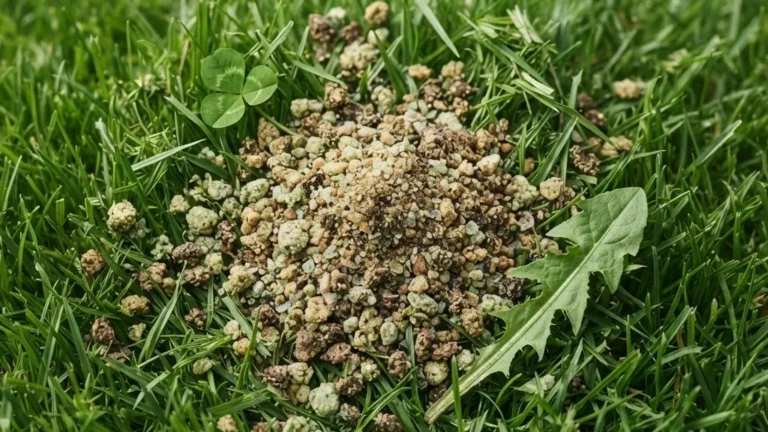
- Leave the cores. Do not bag them; they break down and feed the surface.
Do this on a schedule that matches wear. University of Maryland Extension, in guidance from Traunfeld, recommends every 1 to 2 years for high-traffic lawns and every 2 to 4 years otherwise, and advises aerating before overseeding. University of Wisconsin Extension bulletin A3710 by John C. Stier widens the range to 1 to 5 years and pairs aeration with top-dressing for stubborn soils.
Watch the first test strip closely before committing to the whole lawn. Pull the aerator across a 10-foot section, stop, and check three things: whether the cores are coming out intact rather than crumbling to dust, whether the depth matches the 2 to 3 inch target, and whether the tines are clogging with mud. If cores crumble, the soil is likely too dry and needs another day of watering. If the tines clog, back off and let the ground dry slightly instead of pushing through wet, sticky soil.
Troubleshooting common problems
Shallow or inconsistent holes are the most common complaint, and the cause is almost always ballast, not the machine. If cores are coming up shorter than 2 inches, add weight to the tray in small increments and retest, since most towed units are rated well above their factory-shipped ballast and buyers rarely fill them to capacity. If holes look fine on flat ground but disappear on a slope, the aerator is likely riding up rather than staying level; slow down and take slopes at a slight angle rather than straight up or down.
Uneven hole spacing usually comes from towing speed. Pulling the aerator too fast reduces dwell time per tine and produces shallow, widely spaced holes even with full ballast. Slow, steady towing at walking pace gives the tines time to sink to full depth and pull a clean core before the next rotation begins.
If the machine clogs repeatedly even on correctly moist soil, check the tines themselves. Bent or dulled tines from hitting buried rock or root systems will tear rather than core, and torn soil clumps clog the mechanism far more than clean cores do. Inspect the tine set after any pass over rocky or root-heavy ground and straighten or replace damaged tines before the next use.
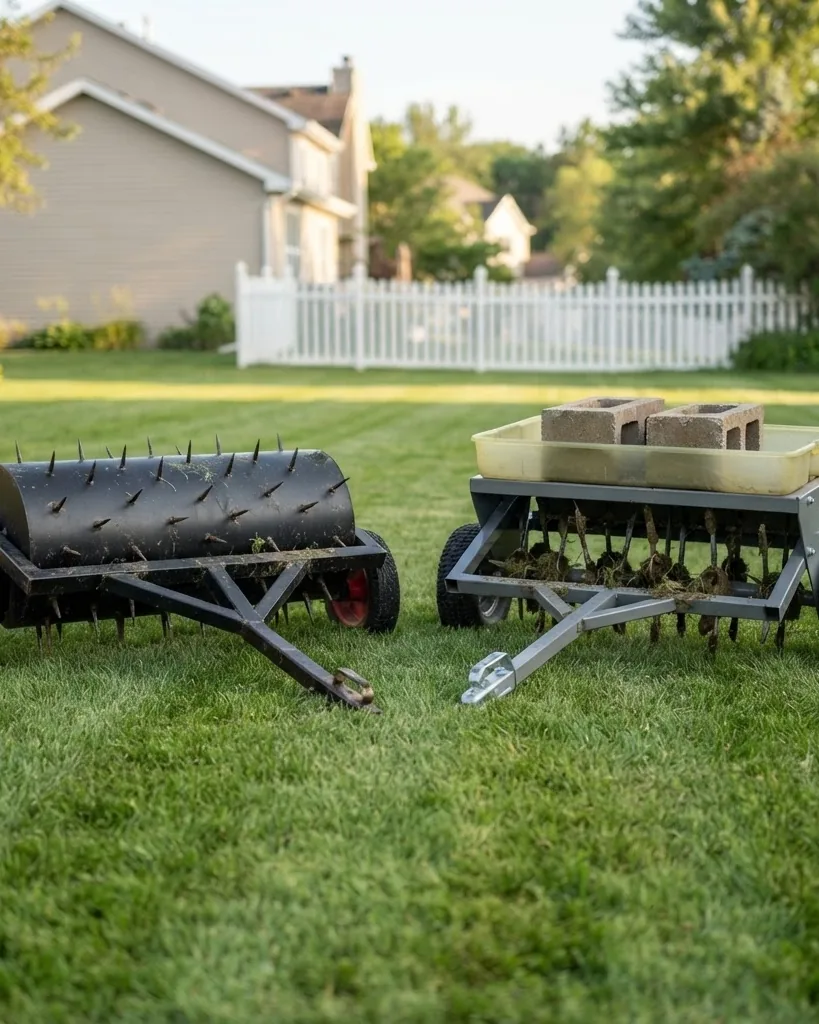
Aerator maintenance: bearings, grease points and off-season storage
A towed aerator is simple machinery, but the parts that spin under load need attention. Wheel bearings and the drum or tine-shaft bearings should be greased at the start of each season and again if the unit sees more than a handful of passes, since dirt and moisture work into these joints during normal use and dry grease accelerates wear. Most manufacturers spec a standard multipurpose grease gun fitting at each bearing point; check the tine shaft ends and wheel hubs specifically, since those carry the heaviest load when the tray is full.
Tines themselves are wear parts. Solid spikes dull with use and hollow coring tines can develop burrs at the cutting edge that tear soil instead of coring it cleanly. Inspect both after each season and sharpen or replace as needed; a dull tine set is a common, overlooked reason a machine that once cored cleanly starts producing torn, shallow holes.
Storage matters more than most owners assume. Empty the ballast tray fully before storing the unit, since standing water left in a drum-style reservoir over winter can corrode the tank from the inside and freeze-crack seams in cold climates. Store the aerator under cover if possible, and coat exposed tines and the frame with a light oil before an extended off-season to prevent rust from taking hold on bare steel surfaces.
Safety and the mistakes that ruin a pass
The dangerous errors are the ones you cannot see. Before a single tine touches ground, Colorado State University Extension says to mark sprinkler heads, irrigation lines, and buried cables, because a coring tine will shear an emitter or a low-voltage wire without warning. Skip that step and a cheap job turns into a plumbing bill. Two agronomic mistakes do quieter damage: running solid spikes that compact the soil, which North Dakota State University Extension and Iowa State University Extension both warn against, and aerating a lawn that is dormant or baking in a heat wave, when the turf cannot recover from the wounds. Retailer buying guides add the obvious one, steel-toe footwear near spinning tines.
Keep bystanders and pets well clear of the working area while towing an aerator. A loaded drum or tine bar throws small clumps of soil and can catch loose clothing or a leash if someone walks too close during a turn. Slow down before any turn at the end of a row, since a fast turn under full ballast can also tip a lightly built frame on uneven ground.
Buy vs rent vs hire, and when each pays off
The money math is really a frequency math. A tow-behind spike unit starts around 100 dollars, per The Ground Guys, and a plug tool built from 14-gauge steel like the FIMCO line is not much more. Renting a heavier core machine through Sunbelt Rentals, at 30 to 36 inches with up to 48 coring tines and about 250 pounds, gets you commercial coring for a single weekend without storing 250 pounds of steel.
Match the choice to how often you will pull it:
- Buy when you aerate often enough that owning makes sense, since a sub-100-dollar spike or an entry plug is affordable enough to own outright.
- Rent when your soil needs it only occasionally, up to the 1-to-5-year window University of Wisconsin Extension describes, and you want proper coring without ownership.
- Hire a service when the lawn is large, the compaction is severe, and you have no tractor rated for a 400-plus-pound loaded implement.
Run the numbers over five years to see where each option actually lands. Buying a 100-dollar spike unit and using it every other year costs about 100 dollars total plus storage space, since the tool itself is the only expense after the first purchase. Renting a comparable core machine for a single weekend at a typical big-box rental rate, done three times over five years to match the every-2-to-4-year window, generally runs higher in cumulative cost than owning a basic spike but still well under the price of hiring a lawn service for the same three visits. Hiring wins mainly on convenience and on the largest, most severely compacted lawns, where the labor and heavier commercial-grade coring outweigh the added cost.
After the pass: cores, overseeding and feeding
The last step is doing almost nothing. Leave the cores on the surface; Iowa State University Extension describes them at about 3/4 inch across and 3 inches long, and once they dry a light rake scatters them back into the canopy where they melt away. That returned soil is part of the benefit, not litter to clean up. University of Maryland Extension recommends overseeding right after aeration, since the fresh holes cradle seed and give it soil contact. For heavier ground, University of Wisconsin Extension pairs the pass with a thin top-dressing, so the openings backfill with better material instead of the same compacted layer you just punched through.
Timing the overseeding matters as much as timing the aeration itself. Seed dropped within a day or two of the pass, while holes are still open and soft-edged, makes the best contact with soil. Wait too long and the holes begin closing from rain or foot traffic, which cuts the advantage aeration was supposed to create. If you plan to overseed, have the seed and any starter fertilizer ready before you start the aerator, not after.
Frequently asked questions
How many holes per square foot should a pull behind lawn aerator leave?
Iowa State University Extension puts the target at 20 to 40 holes per square foot for a properly aerated lawn, with cores roughly 3/4 inch in diameter and 3 inches long. Most single passes fall short of that, so cross-hatch the lawn and double up on the compacted strips until the surface shows real hole density.
Should I choose spike or plug for a towed unit?
Plug, in most cases. Hollow tines pull soil cores and open real channels, while solid spikes can compact the ground, a caution repeated by Iowa State University Extension and North Dakota State University Extension. Reserve spikes for small yards, sandy soil, or light compaction where you mainly want a quick pass before overseeding.
When should I aerate cool-season grass?
During active growth, so holes fill in fast. Iowa State University Extension points to September and April for Kentucky bluegrass, and North Dakota State University Extension narrows the fall pass to late August through mid-September. Warm-season lawns are best aerated in fall, according to West Virginia University Extension.
How much weight do I add to the tray?
Enough to reach 2 to 3 inches of depth, no more than the frame is rated to carry. The FIMCO plug tray holds up to 175 pounds and the Jiuni tray up to 220 pounds. Bricks, sandbags, or water ballast all work; add gradually and check core depth after a test strip.
Does the soil need to be wet before I aerate?
Moist, not wet. North Dakota State University Extension and Iowa State University Extension explain that tines cannot penetrate dry ground and clog in saturated soil. Water the day before, or aerate after rain, so the ground is damp enough for the tines to pull clean cores at full depth.
Do I rake up the cores afterward?
No. Leave them to break down on the surface. Iowa State University Extension describes cores about 3/4 inch across and 3 inches long that dry and crumble back into the lawn. Michigan State University Extension notes that on clay soils, this coring is what builds the channels for gas and water exchange.
What tow vehicle do I need for a heavier plug aerator?
It depends on loaded weight, not just the empty frame. A drum-style unit can climb from 143 pounds empty to 410 pounds filled with water, which calls for a compact utility tractor rather than a light riding mower. The AERA-vator AE-40E needs about 100 pounds of pull at the hitch during operation, a load most riding mowers above roughly 18 horsepower can handle.
The bottom line
A towed aerator is only worth pulling if the mechanism and the numbers agree. Pick hollow tines over solid spikes, load the tray until cores reach 2 to 3 inches, aim for 20 to 40 holes per square foot on moist soil during active growth, and time the pass to your grass rather than the calendar. Grease the bearings each season, empty the ballast before storage, and mark every sprinkler head and buried line before the first pass. Then finish the job: overseed into the fresh holes and match the feed to the soil, using a compost top-dressing ratio and volume that improves the surface without smothering the crowns.