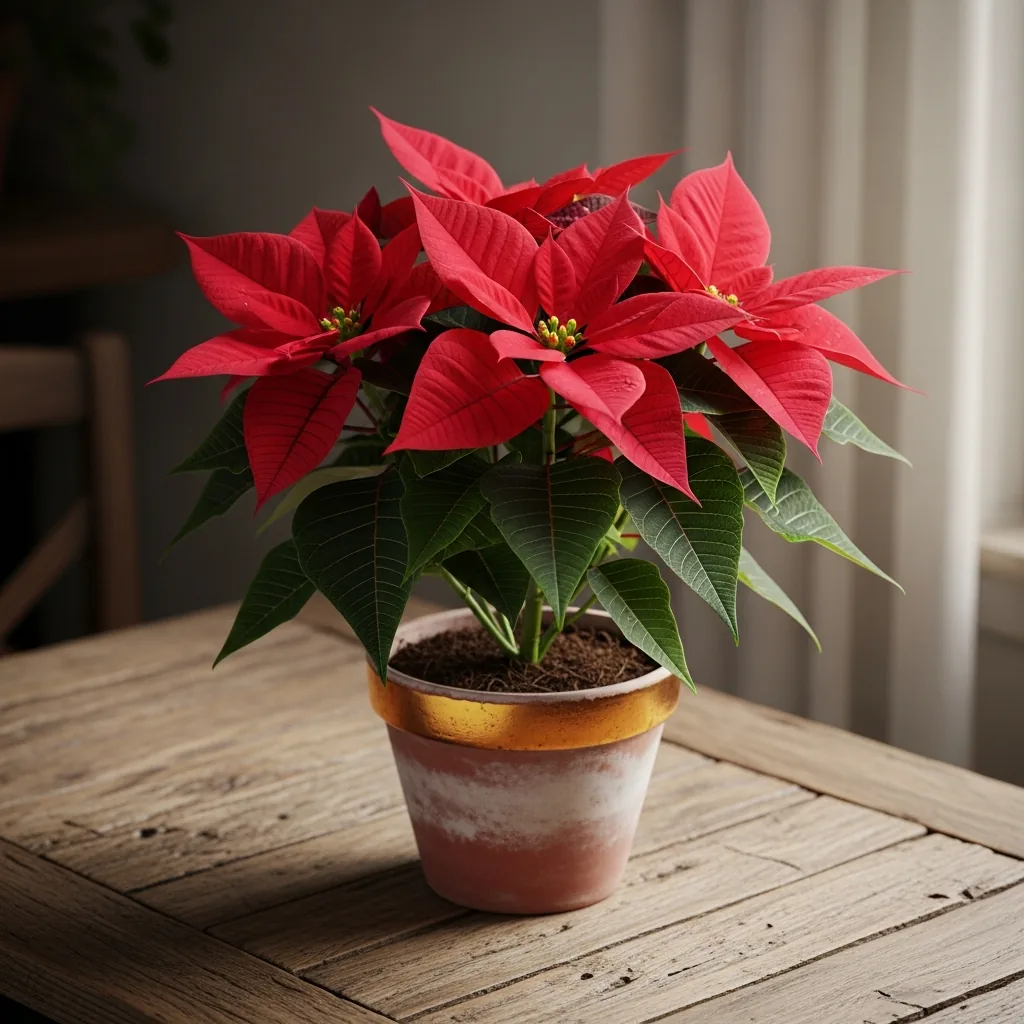
Quick Guide to a Healthy Poinsettia
Quick version: To get a healthy poinsettia, inspect the leaves and bracts for lively color and avoid plants with yellowing or drooping foliage. Check the soil moisture-it should be slightly moist, not soggy or bone-dry. Look for a full, bushy plant with sturdy stems. When bringing it home, protect it from cold drafts and sudden temperature changes. Keep it in a spot with bright, indirect light, away from heat sources and drafts. Water only when the top inch of soil feels dry, using room-temperature water. Avoid overwatering, as this is a common killer of poinsettias (houseplant care).
Bringing a poinsettia home for the holidays can be a festive treat. But let’s be honest, sometimes they don’t stick around for long. I’ve definitely been there, wondering why my lively plant turned sad so quickly.
This guide is here to help you pick a truly healthy poinsettia and keep it happy. We’ll cover everything from selecting the best plant at the store to understanding its needs indoors. You’ll learn what to look for and what to avoid, all based on reliable horticultural advice.
We won’t cover forcing blooms for next year, but we’ll give you a solid foundation for enjoying your poinsettia this season. It’s written from a fellow gardener’s perspective, backed by trusted sources.
Why Picking a Healthy Poinsettia Matters
You’re heading out to grab a festive plant, and you want one that actually lasts. Nobody wants a beautiful poinsettia to turn into a sad, droopy mess after just a week. The fact that you looked this up means your garden is in good hands. A healthy poinsettia starts with smart choices at the store. Plants kept in poor conditions, like cold drafts or extreme heat, are already stressed. This stress makes them more susceptible to problems once they’re in your home.
According to the University of Illinois Extension, understanding a plant’s origin and ideal conditions is key to its survival indoors. Poinsettias are tropical plants, native to Mexico. They prefer consistent warmth and bright, indirect light. When you select a plant that’s already showing signs of distress-like yellowing leaves or wilting bracts-you’re starting with an uphill battle. Choosing a plant that’s been grown and cared for properly gives you the best chance for long-term enjoyment. It means fewer headaches for you and a more lively display throughout the holiday season.
When to Watch and When to Call an Expert
Poinsettias are generally hardy if their basic needs are met. Most issues you’ll encounter can be managed with careful observation and adjustments to care. However, some signs indicate a more serious problem that might require professional advice or a call to a pet poison helpline.
Worth watching:
- Slight yellowing of lower leaves: This can be normal as the plant ages or a sign of minor overwatering. Try letting the soil dry out a bit more between waterings.
- Drooping leaves: If the plant is dry, it will droop. Water thoroughly and see if it perks up. If the soil is moist and it’s still drooping, it could be a sign of root rot from overwatering.
- Bracts losing color or wilting: This often happens due to environmental stress like cold drafts, heat, or inconsistent watering. Try to stabilize its conditions.
- Slowed growth: Once the holiday bloom is over, the plant naturally slows down. Don’t expect rapid growth until spring.
- Occasional brown leaf tips: This can be caused by dry air or inconsistent watering. Ensure you’re watering evenly and consider a humidity tray if your home is very dry.
Worth calling an expert:
- Severe leaf drop or wilting with consistently soggy soil: This strongly suggests root rot, which can be fatal. A horticulturalist might offer advice, but often repotting into fresh soil is needed.
- Signs of significant pest infestation (e.g., visible whiteflies, mealybugs): While minor pests can sometimes be managed at home, a heavy infestation can quickly overwhelm the plant and spread. ASPCA lists poinsettias as having mild toxicity, but significant pest issues are a separate concern.
- Suspected poisoning in pets: While poinsettias are often over-warned about, some pets might have adverse reactions. If your pet ingests a large amount or shows unusual symptoms like vomiting or skin irritation, contact your veterinarian or the ASPCA Animal Poison Control Center immediately.
- Persistent issues despite care adjustments: If you’ve tried adjusting watering, light, and temperature and the plant continues to decline rapidly, it might be a deeper issue beyond simple care.
Caring for Your Poinsettia: Step-by-Step
- Select Wisely: Before buying, inspect the plant. Look for bright, colorful bracts (the modified leaves that look like petals) and healthy green leaves all the way down the stems. Avoid plants with yellowing or dropping leaves, or any signs of pests. Check that the soil is neither bone dry nor waterlogged. A bushy plant with sturdy stems is generally a good sign of strong health.
- Protect During Transport: Poinsettias are sensitive to cold. If it’s chilly outside, ask the store to wrap your plant in paper or a plastic sleeve. Avoid leaving it in a cold car for extended periods. The shock of cold air can cause leaf drop.
- Find the Right Spot: Once home, place your poinsettia in a location with many bright, indirect light. A south- or west-facing window is often ideal, but avoid direct, harsh sunlight, which can scorch the leaves. Crucially, keep it away from cold drafts (like near leaky windows or doors) and direct heat sources (like radiators or heating vents). Temperatures between 65-70°F (18-21°C) during the day and not dropping below 55°F (13°C) at night are best.
- Water Correctly: Overwatering is the most common mistake. Water your poinsettia only when the top inch of soil feels dry to the touch. Use room-temperature water; cold water can shock the roots. Water thoroughly until water drains from the bottom of the pot. Discard any excess water that collects in the saucer after about 20-30 minutes. Never let the plant sit in standing water, as this leads to root rot.
- Monitor Humidity: Poinsettias appreciate a bit of humidity, especially in dry indoor environments during winter. You can increase humidity by placing the pot on a pebble tray filled with water (ensure the bottom of the pot isn’t submerged) or by grouping it with other plants. Misting can offer temporary relief but isn’t a long-term solution.
- Post-Holiday Care (Optional): If you want to try keeping your poinsettia alive after the holidays, trim it back in late winter or early spring. Wait until new growth appears, then cut the stems back by about half. Continue to provide bright light and water as needed. To encourage reblooming, you’ll need to expose it to 14 hours of uninterrupted darkness for several weeks starting in early fall, a process that can be challenging indoors.
Debunking Poinsettia Myths
Myth: Poinsettias are highly toxic and deadly to pets and humans.
Reality: This is a persistent myth, but it’s largely untrue. While poinsettias can cause mild irritation to the skin or stomach if ingested, they are not deadly. The ASPCA confirms that poinsettias are considered to have mild toxicity. Symptoms might include vomiting or drooling in pets if they eat a significant amount. However, most pets show little interest in them, and the irritation is usually minor. If you’re concerned about your pet, it’s always best to keep any potentially irritating plants out of reach.
Myth: You can’t keep a poinsettia alive after the holidays.
Reality: It’s definitely possible to keep a poinsettia going after the festive season, though encouraging it to rebloom is the real challenge. With proper care-adequate light, correct watering, and appropriate temperatures-they can be maintained as attractive houseplants. The University of Illinois Extension notes that with consistent care, they can survive for years. Reblooming requires specific light manipulation in the fall, which can be tricky to achieve consistently indoors.
Myth: The colorful parts of a poinsettia are its flowers.
Reality: Those lively red, pink, or white parts that most people call the “flowers” are actually specialized leaves called bracts. The true flowers are small, yellowish structures found in the center of the bracts. These tiny flowers are where pollination and seed production would occur in their native habitat.
Myth: Poinsettias need very little water.
Reality: While overwatering is a major killer, poinsettias do need consistent moisture. They shouldn’t be allowed to dry out completely. The key is to water when the top inch of soil feels dry, ensuring the plant receives enough hydration without becoming waterlogged. Letting them dry out too much will cause wilting and leaf drop, similar to overwatering.
What to Observe in Your Poinsettia
Keeping a close eye on your poinsettia helps you catch potential issues early. Here’s a checklist of what to observe:
- Leaf Color: Are the leaves a healthy, lively green? Watch for yellowing or browning, especially on lower leaves.
- Bract Color: Are the colorful bracts still bright and firm, or are they wilting or fading?
- Stem Integrity: Check if the stems are sturdy and upright. Mushy or weak stems can indicate problems.
- Soil Moisture: Feel the top inch of soil regularly. Is it dry, slightly moist, or soggy?
- Watering Frequency: Note how often you’re watering. Is it consistent with the soil moisture check?
- Temperature Fluctuations: Are there drafts or heat sources nearby? Monitor the room temperature, especially at night.
- Pest Presence: Periodically inspect the undersides of leaves and where stems meet leaves for any signs of insects like aphids or whiteflies.
- Growth Rate: Observe if the plant is actively growing, showing new leaves or stems, or if growth has stalled (which can be normal after blooming).
Frequently Asked Questions
How do I get my poinsettia to rebloom next year?
Encouraging a poinsettia to rebloom is challenging but possible. Starting in early October, it needs about 14 hours of complete darkness each day for 6-8 weeks. Any light exposure, even a streetlamp, can disrupt the process. Keep it in a dark closet or cover it with a box. Maintain consistent watering and moderate temperatures during this period. You’ll typically see color change starting in late fall.
Are poinsettias poisonous if a cat or dog eats them?
While often cited as highly toxic, poinsettias are generally considered to have mild toxicity. The sap can cause skin irritation for many and pets. If ingested, it might lead to vomiting, drooling, or mild diarrhea. The ASPCA confirms they are not typically life-threatening, but it’s wise to prevent pets from chewing on them. If your pet shows severe symptoms, contact your vet.
Why are my poinsettia’s leaves turning yellow and falling off?
Yellowing and dropping leaves are common signs of stress. The most frequent culprits are overwatering or underwatering. Check the soil moisture: if it’s soggy, you’re overwatering; if it’s bone dry, you’re underwatering. Other causes include sudden temperature changes, drafts, or insufficient light. Adjust your watering schedule and ensure the plant is in a stable environment with adequate light.
Can I repot my poinsettia now?
It’s best to repot a poinsettia after its blooming period, typically in late winter or early spring. If the plant is severely root-bound or the soil is in poor condition, you might consider it. Use a pot only slightly larger than the current one and a well-draining potting mix. Repotting too late in the season can disrupt its energy for future growth and blooming.
What temperature is best for a poinsettia?
Poinsettias prefer consistent, moderate temperatures. Ideal daytime temperatures are between 65-70°F (18-21°C). Nighttime temperatures should ideally not drop below 55°F (13°C). Avoid placing them near cold windows, doors, or heating vents, as sudden temperature fluctuations can cause stress and leaf drop.
How often should I water my poinsettia?
Water your poinsettia when the top inch of soil feels dry to the touch. This might be once or twice a week, depending on your home’s humidity and temperature. Always water thoroughly until water runs out the drainage holes, and then discard any excess water from the saucer. Never let the pot sit in standing water.
Enjoying Your Festive Plant
Choosing a healthy poinsettia is the first step to enjoying its festive color. By understanding its basic needs for light, water, and temperature, you can help it thrive. Remember, I’ve killed my fair share of houseplants, so don’t get discouraged if you face a few challenges. Pay attention to the signs your plant is giving you. If you encounter serious issues, like aggressive pests or persistent decline, don’t hesitate to seek advice from your local cooperative extension office or consult the resources mentioned. Happy gardening!